





















Advertisement
Follow us:
Advanced search
           
Browse all EVs
           
Browse all used cars
           
Sell your car, get paid fastFree inspection · fast payment Sell for a higher price Add paultan.org as a preferred source on Google Add
 

Perodua QV-E review - all the good and bad

Sell your car for a higher price, get paid in 24 hours

Latest Stories

  • Geely Battleship 700 in Australia in 2H 2027 – 1,128 PS PHEV SUV, 0-100 km/h 3.95 secs, 170 km WLTP EV range

    Geely Battleship 700 in Australia in 2H 2027 – 1,128 PS PHEV SUV, 0-100 km/h 3.95 secs, 170 km WLTP EV range

    Geely appears to be mounting an almighty assault on the Australian market, after kicking things off with the EX5 (known to you and me as the Proton eMas 7) and Starray EM-i (Proton eMas 7 PHEV). The appropriately-named Battleship 700 – no Galaxy sub-brand for global markets – will join the Emgrand L EM-i and Monjaro EM-i in the second half of 2027.

    The country gets the most potent version of the boxy plug-in hybrid SUV – a triple-motor setup that produce 313 PS and 350 Nm of torque at the front and 598 PS and 620 Nm at the rear. Couple that with the 218 PS/360 Nm 2.0 litre turbo four-cylinder and a three-speed dedicated hybrid transmission (DHT) and you’re looking at a total of 1,128 PS and 1,330 Nm (!).

    Despite the Battleship weighing a rather hefty 2,705 kg, it’ll sprint from zero to 100 km/h in a barely believable 3.95 seconds on its way to a top speed of 220 km/h. A 47 kWh Aegis short blade LFP battery – guarded by six layers of underbody protection – delivers a claimed pure electric range of 170 km on the WLTP cycle.

    Geely Battleship 700 in Australia in 2H 2027 – 1,128 PS PHEV SUV, 0-100 km/h 3.95 secs, 170 km WLTP EV range

    The Australian release is light on the details, but we can turn to the Chinese-market model, which has only recently been launched. The Battleship is built on a dedicated Geely Terrain Architecture (GTA) that combines a monocoque construction with an integrated ladder frame, with the passenger cell being made from 100% ultra-high-strength and hot-formed steel.

    It’s an absolute beast, measuring 5,085 mm long, 1,999 mm wide and 1,912 mm tall, with a 2,900 mm wheelbase. Despite this, the car is a strict five-seater, riding on double-wishbone front and independent five-link rear suspension.

    Other features include a “waltz” U-turn function – more commonly known as a “tank turn” – as well as a mechanical locking rear differential, dual-chamber air suspension and a total of six off-road-specific drive modes. Maximum water wading depth is 800 mm, and there’s even a version of the car that with twin propellers that will be able to travel on water (like the Jetour G700), but that will likely remain a China exclusive.

    Previewed by the Galaxy Cruiser concept at Auto Shanghai last year, the Battleship is a departure from Geely’s erstwhile sleek and minimalist design language. Instead, the Chinese conglomerate is jumping on the Defender and Ford Bronco-inspired pseudo-4×4 bandwagon that other such models like the Jetour T2 and Denza B8 have already hopped on.

    The wide-set grille integrates the circular headlights said to be inspired by lion dance costumes, joined together by a light strip and an illuminated Geely Galaxy logo. The beefy front bumper houses what look like orange tow hooks, but the real ones are down below and painted black. There’s even a bonnet scoop.

    Moving further back, the upright glasshouse, wraparound windscreen design, kinked window line, broad shoulders, chunky pull-type door handles, blistered squared-off wheel arches and tailgate-mounted spare tyre are typical for the class. Vertical “star matrix” taillights and 20-inch two-tone alloy wheels complete the look.
    Geely Battleship 700 in Australia in 2H 2027 – 1,128 PS PHEV SUV, 0-100 km/h 3.95 secs, 170 km WLTP EV range

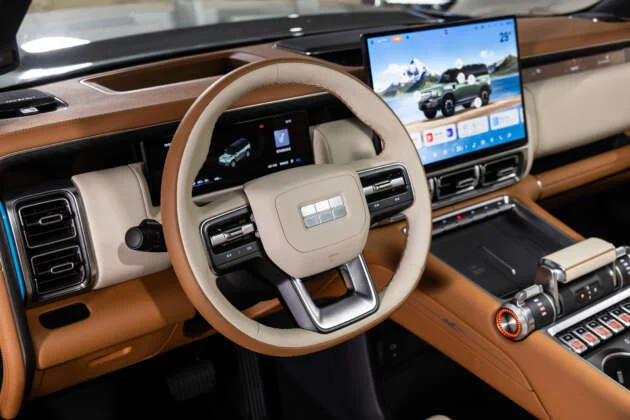
    Inside, the Battleship continues the rectilinear theme with a horizontal dashboard design, vertical corner air-con vents, rectangular quad centre vents and a wide-set centre console housing an aeroplane throttle-style gear selector. The latter is flanked by drive mode toggles illuminated in orange, sitting ahead of crystalline buttons for various vehicular functions.

    The tech onboard consists of a 10.2-inch instrument display and a 15.6-inch infotainment touchscreen, below which sits physical air-con controls (yay!). The Chinese-market display unit also gets an exceedingly slim 12.66-inch passenger readout, but this is unlikely to be offered elsewhere. Despite the car’s flagship status, Geely has only seen fit to include a single 50-watt Qi wireless charger, despite there being space for two.

    Thankfully, Geely hasn’t cheapened out anywhere else. The Battleship comes with fully-reclining ten-layer front seats with ventilation and massage, a heated and cooled centre console fridge, triple-zone auto air con, a panoramic sunroof that opens all the way back to the rear seats, active noise cancellation and a 23-speaker Flyme Sound system, among others.

    While right-hand drive Geely models are usually a precursor to Proton getting them to be sold here, something tells us that the Battleship won’t have the same fate. Prices in China range from 199,800 yuan (RM121,700) to 269,800 yuan (RM164,400), but as is usual for cars from the Middle Kingdom, they will likely be much more expensive once converted to right-hand drive, making it unsuitable for a Proton eMas vehicle. Still, imagine the possibilities…

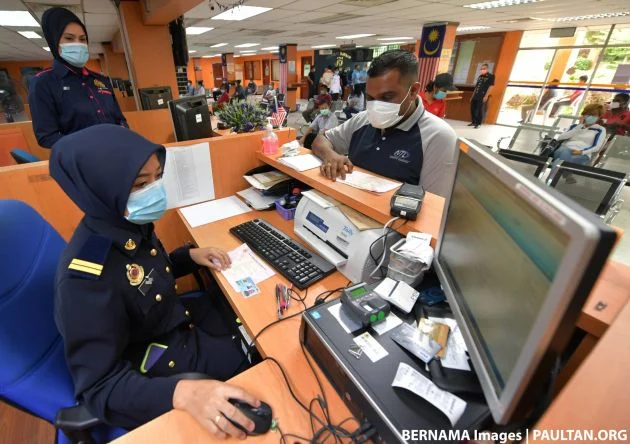
     
  • JPJ suspends MyEG, Zetrix as collection agents – said to owe govt RM200 mil in road tax, summonses payments

    JPJ suspends MyEG, Zetrix as collection agents – said to owe govt RM200 mil in road tax, summonses payments

    The road transport department (JPJ) has announced that it will suspend the services of My E.G. Sdn Bhd and Zetrix AI Berhad, both under the MYEG Group, as its collection agents with effect from Monday, October 5, 2026.

    The decision was made to suspend the companies as collection agents for the JPJ after considering compliance with terms and conditions of the agreement, as well as obligations which have yet to be fulfilled or resolved by the companies, JPJ director-general Datuk Aedy fadly Ramli said in a statement.

    “In line with this decision, all JPJ services which have previously been offered through the MYEG Group will be suspended from October 5, 2026,” the JPJ director-general said.

    The road transport department however gave its assurance that the delivery of the department’s services will continue as usual through its official and alternative channels (listed in the statement embedded below).

    JPJ suspends MyEG, Zetrix as collection agents – said to owe govt RM200 mil in road tax, summonses payments

    A report by Singaporean news outlet The Straits Times wrote that Zetrix is believed to owe the Malaysian government more than RM200 million in collections made on behalf of the JPJ.

    Zetrix was said to have failed to hand over the money collected for vehicle road tax renewals, driving licence renewals and payment of traffic summonses since the start of its three-year contract in May 2023.

    “As at end September, the amount outstanding is well over RM200 million. Right now, the Transport Ministry is mulling over the next step as it wants to have a more reliable digital payment system, but also wants to make sure the money owed is paid up,” an unnamed government official was quoted as saying.

    Zetrix, formerly known as MyEG after its online government services portal, was first appointed in 2000 to provide digital counter services for government agencies, including JPJ and the immigration department, reported New Straits Times.

    Blockchain technology by Zetrix powers MyDigital ID, the national identity management platform. MyDigital ID is the sole login method for accessing MyJPJ.

     
  • KL Standard Chartered Marathon 2026 is on – all KLSCM categories to proceed except for kids; road closures too

    Click to enlarge

    Most runners have been wishing for this – the KL Standard Chartered Marathon 2026 is a go! KLSCM organiser Dirigo said that due to the haze situation, it would make a final decision on the event today. They’ve just announced that all main categories – full marathon, half marathon, 10KM, 5KM – will proceed as planned.

    However, the Kids Dash run scheduled for tomorrow has been dropped “in the best interest of the children”. Parents of Kids Dash participants can collect their child’s entitlements at the info counter at Dataran Merdeka tomorrow from 8am to 12pm. Remember to bring the bib.

    “To all runners: you know your body best. If you have underlying health issues, please weigh your options carefully before deciding to run. We will continue to monitor conditions throughout Saturday and hope for favourable weather on Sunday,” the company said in a statement.

    Click to enlarge

    This means that the extensive list of road closures in the city centre, as well as on AKLEH, MRR2 and DUKE highways, will proceed as planned – full list of roads and timing here. As usual, Dirigo has arranged free LRT and MRT rides for runners in the morning but while all Rapid KL lines will be operating, trains will not stop at all stations – details here.

    Note that the free train rides covered by Dirigo are from 3am to 6am on Saturday, and from 1.45 am to 6am on Sunday. Train frequency is every 15 minutes for the LRT and every 20 minutes for the MRT.

    Finally, the race pack collection expo a.k.a. Active Lifestyle Expo is happening at MITEC this year (Hall 8, Level 2). The opening hours for today is from 11am to 9pm, while it’s 10am to 7pm on Saturday. There’s even a free shuttle to MITEC from Sunway Putra Mall, which is connected to the LRT. The bus pick-up up points are in front of Chagee at the mall and MITEC’s South Entrance. The frequency is every 30 minutes.

    Runners, now that your wish has come true, enjoy the run and good luck!

     
  • BMW compact Neue Klasse EV to launch in 2028 as next 1 Series; large SUV above X7 considered for US market

    2025 F70 BMW 1 Series (left); NA0 BMW i3 (right)

    BMW has revealed that a compact Neue Klasse EV model will debut in 2028, and this model will be focused on the European market.

    The new compact model which will be positioned below the NA0 BMW i3 and the NA5 iX3, and is therefore likely to be the next 1 Series, reported Autocar.

    According to the publication, the next 1 Series will be based on the electric Neue Klasse architecture that underpins the NA0 i3 and NA5 iX3, which should mean that the entry-level variants of the 1 Series will return to a rear-wheel-drive layout.

    BMW compact Neue Klasse EV to launch in 2028 as next 1 Series; large SUV above X7 considered for US market

    The next 1 Series is also expected to mirror the BEV NA0 i3/ICE G50 3 Series duo in featuring internal combustion engine-powered variants alongside the BEVs, where the pairing shares styling but will be mechanically different.

    Meanwhile, the German manufacturer is considering an addition to the top of its SUV range, to be positioned above its current SUV flagship the X7. This potential model “would be closely tailored to the needs of the US market”, BMW stated.

    Global demand for the brand’s wider SUV range is so strong that the Spartanburg plant in South Carolina is operating at capacity, and to that end the BMW Group is working towards “greater regionalisation” in order to be able to expand global production of these SUV models, it said.

     
  • Continental Tyre Malaysia launches in-store marketplace – scan QR code to check tyre stock availability, pricing

    Continental Tyre Malaysia launches in-store marketplace – scan QR code to check tyre stock availability, pricing

    Continental Tyre Malaysia (CTM) has launched a new in-store marketplace as a way to bring greater convenience and transparency to customers looking to purchase Continental and General Tire tyres.

    According to the company, the in-store marketplace addresses common issues such as unclear prices, uncertainty over stock availability and limited production.

    How it works is similar to scanning a QR code at a restaurant to order food. Customers will first need to go over to a dedicated website and scan a QR code found at participating Continental dealers. They will then be presented with a menu of tyres along with pricing and available stock.

    If you prefer not to visit a dealer in-person, you can also contact your preferred dealer to send over the QR code to you or ask for advice before deciding on a purchase.

     
  • JPJ eBid: VRX and VRY number plates up for bidding

    JPJ has announced that VRX and VRY are the next number plate series to go up for bidding on its online auction platform, JPJ eBid.

    WP Kuala Lumpur’s latest running number series is ‘VRX’, and it opened for tender on October 1. The bidding period on JPJeBid is five days, ending 10pm on October 5. As usual, the results will be out the following day. The whole process is online now, as it has been for some time, and bidders will get the good (or bad) news via email.

    Right after VRX in the double header is the ‘VRY’ series. The bidding period starts on October 4, and will close at 10pm on October 8. Results will be out the day after the auction closes.

    New car coming soon and want a nice number plate for the new ride? Why not DIY and skip the reseller’s markup and runner fees? If you have never bid for a number yourself, check out our step-by-step guide on how to navigate JPJ eBid and the techniques needed to get your preferred number at “retail price”.

     
  • 534,886 motorcycles registered in Malaysia from Jan to Aug 2026 – Yamaha leads with 48.1% market share

    534,886 motorcycles registered in Malaysia from Jan to Aug 2026 – Yamaha leads with 48.1% market share

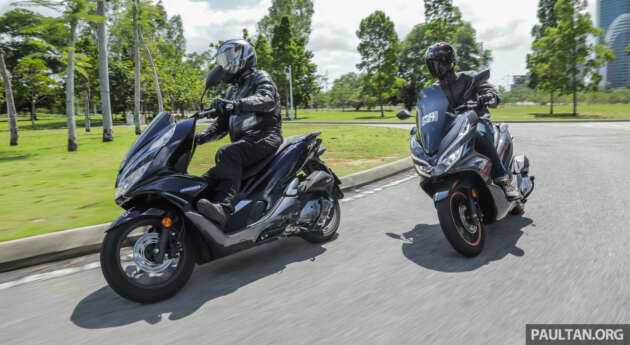
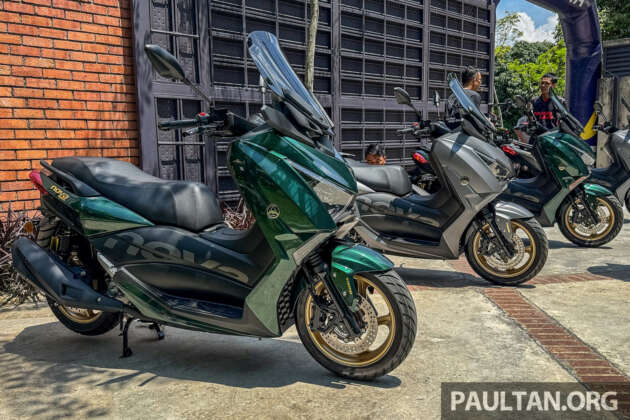
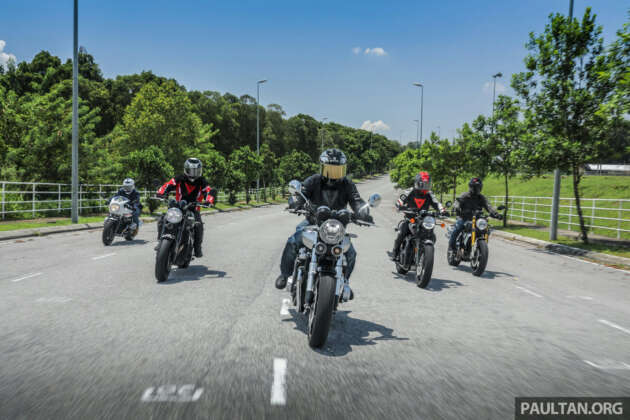
    Malaysia registered 534,866 motorcycles and scooters in the first eight months of 2026, with Yamaha accounting for almost half of all registrations. According to government data covering January to August this year obtained by paultan.org, Yamaha recorded 257,465 registrations during the period, giving it a 48.1% share of the total market.

    Honda followed in second place with 89,562 units or 16.7%, while Aveta emerged as the third highest brand with 38,628 registrations, equivalent to 7.2%. Modenas and QJMotor completed the top five with 25,327 (4.73%) and 22,920 (4.29%) registrations respectively.

    Together, the five brands accounted for 433,902 motorcycles, or 81.1% of all registrations during the eight-month period. On a monthly basis, registrations fluctuated significantly, with February recording the lowest volume at 55,854 units while April saw 74,047 registrations before easing in May and June.

    534,886 motorcycles registered in Malaysia from Jan to Aug 2026 – Yamaha leads with 48.1% market share

    July was the strongest month for motorcycle sales in Malaysia, with 74,677 motorcycles registered, while August recorded 68,708 units. Overall, the second quarter was stronger than the first, with 207,078 registrations from April to June compared with 184,403 units in the January-March period representing a 12.3% increase quarter-on-quarter.

    Yamaha’s dominance remained remarkably consistent throughout the period, with its monthly market share ranging between 45.8% and 50.2%. Aveta, however, showed one of the strongest growth trends among the major motorcycle brands in Malaysia with monthly registrations climbing from 2,911 units in January to 6,219 units in August, an increase of 113.6%.

    534,886 motorcycles registered in Malaysia from Jan to Aug 2026 – Yamaha leads with 48.1% market share

    The electric motorcycle market in Malaysia remained comparatively small, with 12,507 electric registrations, accounting for 2.34% of the total. Petrol motorcycles continued to dominate with 522,350 registrations, or 97.66%.

    Focusing on electric motorcycles (e-bikes), registrations were highly uneven across the eight months. April saw 3,223 electric motorcycles registered, followed by 3,113 in May. Together, those two months accounted for 50.7% of all electric motorcycle registrations in the dataset.

    534,886 motorcycles registered in Malaysia from Jan to Aug 2026 – Yamaha leads with 48.1% market share

    The Malaysian e-bike market was led by Yadea with 3,962 registrations with the strongest month being May with 1,544 registrations, followed by GGR at 3,530 and Ezi at 2,002. The three brands collectively accounted for 75.9% of electric motorcycle registrations.

    While data broken down by state was incomplete with reporting omitting this information, available data showed Kuala Lumpur recorded the largest number of registrations at 15,498, followed by Johor with 13,399 and Selangor with 10,455. Data also shows blue as the most common recorded motorcycle colour, with 127,900 motorcycles registered, followed by green at 98,802, together accounting for 42.4% of all registrations.

     
  • RTM will broadcast the Formula 1 Gulf Air Bahrain Grand Prix in Malaysia live – watch for free on TV Okey, RTMKlik

    RTM will broadcast the Formula 1 Gulf Air Bahrain Grand Prix in Malaysia live – watch for free on TV Okey, RTMKlik

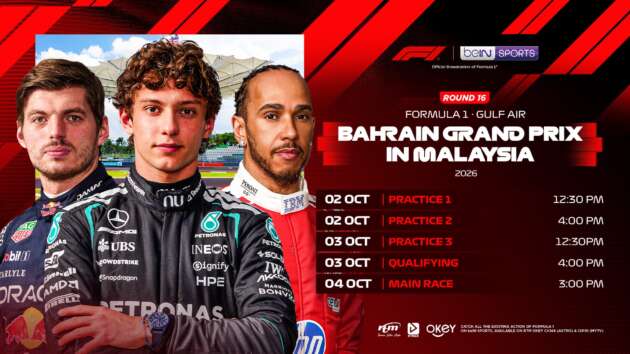
    Prime minister Datuk Seri Anwar Ibrahim has announced that Radio Televisyen Malaysia (RTM) will broadcast the Formula 1 Gulf Air Bahrain Grand Prix in Malaysia live. This is good news for those who didn’t manage to get a ticket or are not subscribed to a streaming service that shows the race.

    “I hope this live broadcast will give Malaysians in all corners of the country the opportunity to feel the thrill of world-class racing at Sepang International Circuit (SIC),” Anwar said in a Facebook post today. The broadcast was made possible thanks to a collaboration with beIN Sports.

    F1’s return to Sepang comes after a nine-year hiatus, with the race weekend already up and running from October 2 to 4. Friday (October 2) will feature two free practice sessions, while the third practice session and qualifying takes place on Saturday (October 3). The 56-lap main race is on Sunday and starts at 3pm.

    Suffice to say, the response to SIC hosting F1 again has been immense, with nearly 100,000 tickets sold, a record according to SIC CEO Azhan Shafriman Hanif. You’ll be able to watch the live F1 broadcast via RTM’s TV Okey or stream it using the RTMKlik app (the same one used for this year’s World Cup).

     
  • Harley-Davidson stops racing in King of Baggers after 2026, shifts focus to 2027 FIM H-D Bagger World Cup

    Harley-Davidson stops racing in King of Baggers after 2026, shifts focus to 2027 FIM H-D Bagger World Cup

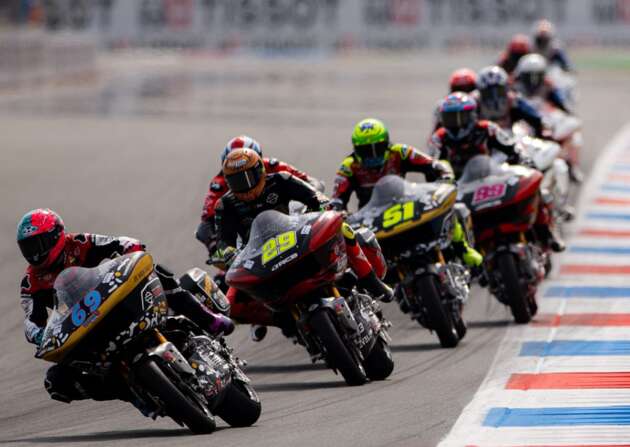
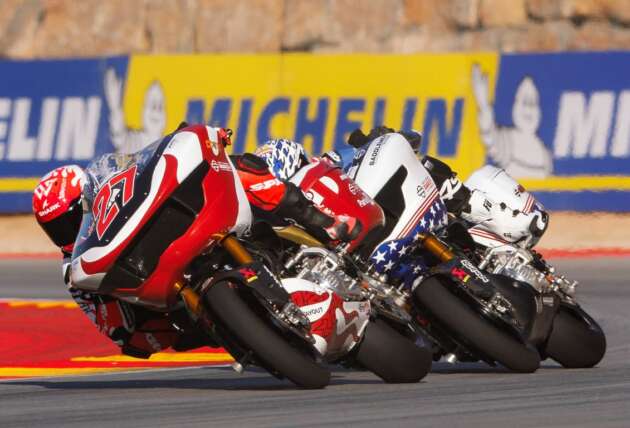
    Harley-Davidson (H-D) is ending its factory racing programme in MotoAmerica’s King of the Baggers after the 2026 season, shifting its focus to the FIM Harley-Davidson Bagger World Cup as its premier racing platform from 2027. The move comes after the inaugural Bagger World Cup season, a new global championship developed by H-D and MotoGP and sanctioned by the FIM.

    The series is the first global racing championship dedicated exclusively to high-performance H-D baggers, bringing heavily modified Grand American Touring machines onto MotoGP circuits in North America and Europe. The 2026 championship featured six MotoGP race weekends and 12 races, visiting the Circuit of the Americas, Mugello, Assen, Silverstone, Aragon and the Red Bull Ring.

    The race bikes are based on H-D’s Road Glide platform and use factory-developed competition hardware, with more than 200 hp from a 2,152 cc Screamin’ Eagle 131R engine. Unlike a conventional production-based championship, the Bagger World Cup uses a single-machine format, with H-D supplying the race motorcycles to participating teams under FIM technical regulations.

    Harley-Davidson stops racing in King of Baggers after 2026, shifts focus to 2027 FIM H-D Bagger World Cup

    The bikes are purpose-built for circuit racing, combining the size and V-twin character of a H-D touring motorcycle with race-developed chassis and performance hardware. H-D will expand the championship for 2027 with additional teams, riders and races.

    The company also plans to use the series as a development and technology platform for future motorcycles and race-derived Screamin’ Eagle performance products. The change comes after Joe Rascal Racing’s Archie McDonald was crowned the inaugural Bagger World Cup champion, following a title fight that went down to the final race at the Austrian Grand Prix.

     
  • 2027 Hyundai Tucson more details – Pleos Connect, petrol, hybrid, 292 PS PHEV with 81 km EV range

    2027 Hyundai Tucson more details – Pleos Connect, petrol, hybrid, 292 PS PHEV with 81 km EV range

    First shown to the world in August, the new fifth-generation Hyundai Tucson has been fully revealed ahead of it going on sale in Korea later this year, with other markets to follow in 2027. This time, we get full details of the powertrain lineup to go with the controversially edgy design.

    Four carryover options will be offered, including two four-cylinder petrol engines – a 150 PS/192 Nm 2.0 litre naturally-aspirated MPI and a 193 PS/265 Nm 1.6 litre T-GDI turbo; the 2.5 litre NA GDI has been nixed. In Europe, the turbo mill is markedly less powerful, producing 150 PS and 250 Nm even with a 48-volt mild hybrid system.

    The base 2.0 litre will still be available with six-speed manual and auto gearboxes, while depending on the market, the 1.6 litre turbo can be had with either the manual, a seven-speed dual-clutch transmission or an eight-speed auto. Both engines are fitted with the world’s first integrated electric water pump to save weight while maintaining performance and reliability.

    Next up is the hybrid, which continues to pair the 1.6 litre turbo with an 18 PS P1 starter-generator, a 65 PS P2 traction motor and a six-speed auto for total outputs of up to 245 PS and 380 Nm of torque. It’s available with front- or all-wheel-drive, with the former getting from zero to 100 km/h in 8.3 seconds and delivering fuel consumption of 17.4 km per litre.

    2027 Hyundai Tucson more details – Pleos Connect, petrol, hybrid, 292 PS PHEV with 81 km EV range

    The biggest change is to the plug-in hybrid, which has a much punchier 107 PS P2 motor, boosting outputs by some 27 PS and 30 Nm to 292 PS and 380 Nm. This is only available with AWD and sprints to 100 km/h in 7.9 seconds, and with a 17.1 kWh battery, the PHEV is targeted to offer a pure EV range of 81 km – around 20 km more than before. Charging capacity using an AC wallbox has also been increased to 7.2 kW.

    Hyundai has confirmed that the Tucson will retain its short and long wheelbase variants (Malaysia got the LWB version last time out). Both are larger than before, with the European SWB model measuring 4,560 mm long, 1,900 mm wide and 1,670 mm tall with a 2,720 mm wheelbase and the LWB being 4,700 mm long, 1,905 mm wide and 1,685 mm tall with a 2,785 mm wheelbase. The front overhang is 20 mm longer for better pedestrian crash protection.

    Under the skin, the Tucson benefits from an increased use of hot-stamped steel for better body rigidity and impact resistance, while reinforced B-pillars and multi-point collision energy management absorb and distribute impacts to maintain long-term structural integrity, all in the name of quality, safety and reliability. Refinement has also been improved through enhanced sound insulation and sealing and aerodynamic tweaks.

    The past month has given us time to digest the polarising new look, but it’s still not exactly a wallflower. The Tucson sticks to the futuristic theme, but instead of the previous blend of curves and straight edges, there’s now a much more austere aesthetic, bringing to mind the Elantra. This is part of the Art of Steel design language that we first saw on the Ioniq 3.

    It’s altogether less sporty and more architectural, with voluminous flared fenders that emphasise the car’s muscular stance and enhance the interplay between light and shadow. Hyundai says that the clean surfacing and sharp character lines combine to create the tension that is characteristic of steel, whatever that means. Silver window trim and D-pillars provide added contrast against the wraparound windscreen design.

    The front and rear ends are dominated by the full-width H lighting signature that is again reminiscent of the Elantra. The horizontal light bar at the front is recessed and provides soft indirect lighting, while the taillights get a prism structure and reveal an intricate pattern when lit.

    The main headlights are hidden within the bumper, as per the outgoing model, and they can now be optioned with micro pixel light (MPL) technology with 25,600 individual LEDs, enabling precise beam control and rain guide lights. Wheel options range from 17 to 20 inches.

    Inside, the Tucson continues the industrial, layered design of the Ioniq 3, with the horizontal upper and lower dashboard appearing to float, separated by a recessed inner panel. The large infotainment touchscreen dominates proceedings, measuring either 12.9 or a whopping 17 inches across and using Hyundai’s new Android Automotive-based Pleos Connect operating system – a first for the US market in particular.

    The system enables native integration of third-party apps without smartphone mirroring (you do still get Apple CarPlay and Android Auto), as well as support for three-finger gesture controls and a single-screen mode. Gleo agentic AI voice control is also included.

    2027 Hyundai Tucson more details – Pleos Connect, petrol, hybrid, 292 PS PHEV with 81 km EV range

    Another benefit of the system is the return of physical air-con, volume and tuner controls to replace some of the old capacitive touch buttons. Meanwhile, the steering wheel has a flat top and bottom to provide an uninterrupted view of the slim 9.9-inch instrument display above it.

    Elsewhere, storage space has been increased with a hidden palm rest tray, luggage add-ons and a card holder by the driver’s side air-con vent. As per the Santa Fe, the Tucson gains the option of dual Qi wireless chargers, now of the latest 15-watt Qi2 magnetised variety.

    The Tucson also appears to be the first Hyundai to offer Bang & Olufsen branding for its 12 speakers, replacing Bose. Typical of the brand, the front seats get a Relaxation one-touch recline feature, but there’s also a new Ergo Motion Seat option with seven-point massage. The triple-zone auto air con is able to blow air indirectly for a more pleasant experience.

    Hyundai claims the increased dimensions provide best-in-class interior space, with rear headroom increasing by 29 mm. The rear doors also open ten degrees wider at 83 degrees to improve entry and egress, while the European model further benefits from 40:20:40 split-folding rear seats. Boot space is 691 litres for the SWB variant and 1,067 litres for the LWB, although the latter is an SAE figure that measures cargo capacity all the way up to the roof.

    A total of eight exterior colours will be offered, five of which are new – Serenity White Pearl, Driftwood Grey Matte, Driftwood Grey Metallic, Red Rock Orange Matte, and Goyo Copper Pearl. These are paired with three new two-tone interior colour schemes, these being mud gray and dove grey, black and sand beige, and black with soil brown inlays, in addition to the usual full black.

    Safety-wise, the Tucson comes with up to nine airbags (including rear side airbags and a front centre airbag) and Level 2 semi-autonomous driving functionality. The adaptive cruise control now uses navigation data to slow for corners and other road features, and there’s also now a BMW-style reversing assistant and a transparency function for the 360-degree camera system.

    For the second straight generation, Hyundai will offer a rugged XRT package, featuring a bespoke front bumper with a larger grille and skid plate, black wheel arch trims with a forged carbon fibre-like pattern, and a new rear bumper and skid plate, plus black window trim and unique wheel options. Inside, there are patterned seats, dark metal decor, protective floor mats and touch-operated LED tailgate lights.

    The fifth-gen model debuts an even tougher XRT Pro variant, only available with AWD. This adds all-terrain tyres, further increased body cladding and front recovery tow hooks, as well as a 30 mm increa in ground clearance to 210 mm.

    This trim also adds Smart Terrain Assist, which grades the likelihood of getting stuck based on live wheel slip data and offers low-speed off-road cruise control. On the other end of the spectrum, a sportier on-road-biased model (N Line?) will be revealed at the Paris Motor Show on October 12.


    GALLERY: 2027 Hyundai Tucson short wheelbase, Europe

     
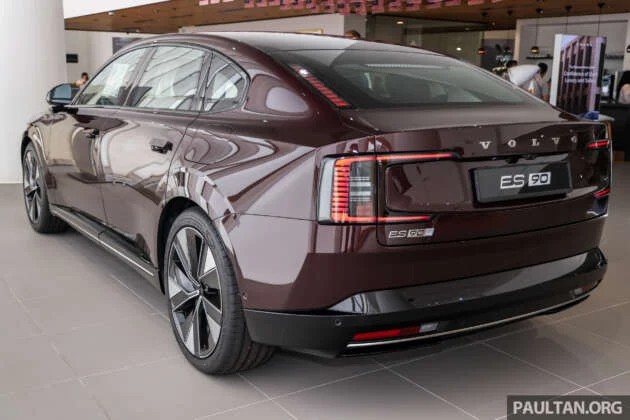
  • Volvo Executive Car Sales returns – Oct 10-11, fr RM148k

    Volvo Executive Car Sales returns – Oct 10-11, fr RM148k

    If you’ve been eyeing a pre-owned or nearly new Volvo, you’ll want to mark your calendars for this. The Volvo Executive Car Sales returns for 2026 and the event will be happening next weekend, October 10-11, 9am to 6pm. As usual, it will be held at Level 3A, Symphony Square, Petaling Jaya, where Volvo Car Malaysia (VCM) is based.

    Volvo Executive Car Sales will feature a curated collection of 80 Selekt Certified Used Cars sourced straight from VCM’s corporate fleet, including exclusive rare finds and newer models, with prices starting from just RM148,000.

    Volvo says that buying from Selekt Certified Used Cars gets one a premium ownership experience that mirrors buying brand new. The units feature ‘exceptionally low mileage’, with the lowest sitting at just 2,000 km, and are meticulously cared for, VCM says.

    Volvo Executive Car Sales returns – Oct 10-11, fr RM148k

    Of course, Selekt cars retain the balance of their five-year unlimited mileage warranty, with 24-hour roadside assistance and digital connectivity. Electrified models carry over the active coverage of their eight-year high-voltage battery warranty. Each car includes an active Volvo Service Plan with a minimum of one year complimentary servicing.

    Further peace of mind is provided by a 125-point inspection by Volvo-trained technicians and the latest software updates. Being in-house fleet cars, they’re fitted only with genuine Volvo parts.

    Price wise, VCM is saying nothing more than ‘starting from RM148k’ but monthly instalments start from RM1,452 for the EX30 EV and RM1,697 for the EC40 EV.

    Volvo Executive Car Sales returns – Oct 10-11, fr RM148k

    For those looking for a more traditional big Volvo SUV experience, the evergreen XC60 starts from RM2,148 a month while the XC90 is yours from RM2,994 per month. Volvo’s electric flagships – the ES90 and EX90 – are going for RM2,639 and RM2,836 a month, respectively.

    To make ownership even more accessible, Volvo Car Finance is offering attractive packages with interest rates from as low as 2% and the convenience of same-day loan approval. With only 80 units available across two days, first-come first-served, be there early if you’re want to drive away the choicest units. Good luck!

     
  • 2027 Subaru WRX GD25, BRZ ZC15 launched in the US – anniversary models with design, handling tweaks

    2027 Subaru WRX GD25, BRZ ZC15 launched in the US – anniversary models with design, handling tweaks

    Subaru has launched two special edition models for the United States at this year’s Boxerfest, which took place recently in York, Pennsylvania. Based on the WRX and BRZ, these cars will go on sale for the 2027 model year and wear nameplates that honour the chassis codes of their respective models when they arrived in the country over a decade ago.

    Let’s start with the brand’s rally-ready sedan that is called the WRX GD25. This commemorates the Impreza WRX that arrived in the US in 2002 and utilised the chassis code ‘GD’. Only 350 units of the WRX GD25 will be offered, each painted in World Rally Blue and equipped with gold-painted 19-inch alloy wheels shod with Bridgestone Potenza S007 tyres.

    Other standout features include uprated Brembo brakes with gold-painted callipers to match the wheels, while the rear gets a swan-neck wing made from dry carbon-fibre. The latter is supplied by the brand’s performance arm, Subaru Tecnica International (STI), and is the same one used on Travis Pastrana’s WRX ARA25L rally car.

    The 2.4 litre turbocharged four-cylinder boxer engine continues to make 271 hp and 350 Nm of torque, paired with all-wheel drive as well as a six-speed manual transmission that has been upgraded with an STI short shifter.

    The WRX GD25 also gets a flexible strut tower bar for better rigidity along with stiffer springs and revised dampers. Inside, Recaro seats with black Ultrasuede inserts and red accent stitching are accompanied by an STI shift knob. The special WRX arrives later in the summer of 2027.

    Next up is the BRZ ZC15, which pays tribute to the first-generation BRZ that reached the US in 2012 and had the chassis code ‘ZC’. This is more exclusive with just 300 units available and it also arrives sooner in early 2027 – both cars are open for reservations now.

    The BRZ ZC15 is only offered with a Ceramic White exterior paint finish that is joined by matte bronze wheels, gold-painted Brembo callipers as well as unique bronze decals near the side sills. Subaru says the white-on-bronze colour scheme is an homage to the 2020 Subaru BRZ tS, which was also limited to 300 units.

    Other enhancements include a black decklid spoiler at the rear and a flexible V-bar under the bonnet, which continues to be home to a 2.4 litre naturally-aspirated four-cylinder boxer engine powering the rear wheels through a six-speed manual transmission.

    The cabin of the BRZ ZC15 is trimmed with black leather and Bordeaux red inserts that aren’t shared with the rest of the BRZ line-up. Further setting it apart is the anniversary edition plaque near the Sti aluminium and leather, short shifter.

    2027 Subaru Subaru BRZ ZC15

    2027 Subaru WRX GD25

     
  • 2027 Kawasaki Ninja 650 gets radial four-piston brakes, Showa USD fork, revised suspension, new TFT layout

    2027 Kawasaki Ninja 650 gets radial four-piston brakes, Showa USD fork, revised suspension, new TFT layout

    Kawasaki has finally given the Ninja 650 a serious hardware upgrade for 2027, replacing the conventional front fork with a 37 mm Showa SFF-BP inverted fork and the existing two-piston axial-mount callipers with radial-mount four-piston brakes. The changes are top of the list of updates for Kawasaki’s 649 cc middleweight sports bike, which also gets revised rear suspension, a redesigned TFT display, expanded smartphone connectivity and a lower seat.

    Up front, the new Showa SFF-BP (Separate Function Fork – Big Piston) replaces the previous telescopic unit. Kawasaki says the fork is designed to reduce damping pressure while delivering greater front-end control and rider feedback.

    The braking system gets an equally significant overhaul, with radial-mount four-piston callipers replacing the previous axial-mount two-piston units. Brake discs sizing is still the same with twin 300 mm diameter semi-floating front discs, while the rear retains the current model 220 mm disc with a single-piston calliper.

    The rear Horizontal Back-link suspension has also been retuned with a revised spring rate, while the front mudguard has been widened to provide greater coverage around the new fork tubes. The Ninja 650’s 4.3-inch colour TFT display receives a new layout for 2027, while Kawasaki’s Rideology smartphone connectivity now supports navigation and voice-command functions.

    2027 Kawasaki Ninja 650 gets radial four-piston brakes, Showa USD fork, revised suspension, new TFT layout

    Power is unchanged, with the Ninja 650 continuing with its 649 cc liquid-cooled parallel-twin, producing around 68 PS at 8,000 rpm and 64 Nm at 6,700 rpm, paired with a six-speed transmission and assist-and-slipper clutch. The 2027 model Ninja 650 also gets a lower 785 mm seat height, while kerb weight is around 194 kg and fuel capacity remains 15 litres.

    Three colours will be offered – Lime Green, Metallic Matte Graphenesteel Gray/Metallic Spark Black and the new Metallic Flat Spark Black/Metallic Carbon Gray. In Malaysia, the current model Kawasaki Ninja 650 ABS was priced at RM35,900 in 2023, excluding road tax, insurance and registration.

     
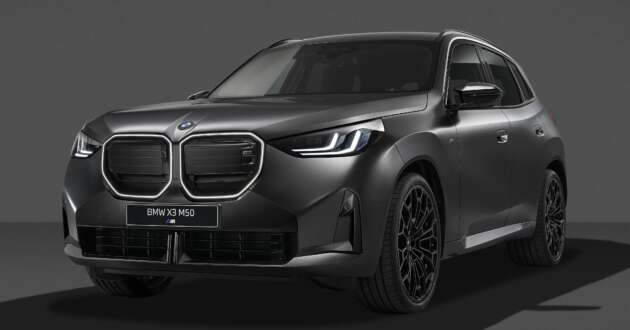
  • 2027 BMW X3 M50 xDrive – more powerful 443 PS/580 Nm 3.0L inline-six turbo petrol, with Black Package

    2027 BMW X3 M50 xDrive – more powerful 443 PS/580 Nm 3.0L inline-six turbo petrol, with Black Package

    The G45 BMW X3 M50 xDrive has been updated for 2027, with the Black Package, which brings more power for its 3.0 litre turbocharged petrol inline-six cylinder engine as well as a darkened aesthetic with the Black Package that is exclusive to this variant.

    Its powerplant, updated to meet Euro 7 regulations, now outputs 443 PS and 580 Nm, up from the 381 PS and 540 Nm when the G45-generation model made its debut in 2025. This enables a quicker 0-100 km/h time of 4.4 seconds, improved from the 2025 model’s time of 4.6 seconds.

    The Black Package is comprised of exterior and interior styling elements, including 22‑inch Polygon 1134 M Black alloy wheels which are one inch larger in diameter over the regular X3 M50 xDrive specification.

    Within these are M Sport brake calipers which are here also finished in high-gloss black, each with a monochrome M logo. These logos, along with the model badges are in black with a silver outline on the X3 M50 xDrive Black Package.

    The darkened styling continues inside the X3 M50 xDrive with the Black Package, where sections of driver’s side instrument panel, central display and smartphone inductive charging tray are trimmed in black BMW Individual Alcantara, as are the door trim and centre console armrest.

    Seat upholstery is by black Alcantara and Veganza, with blue contrast stitching and piping; the headrests also get the M logo embossed on the Alcantara section. Lower down, the floor mats get a flag in M colours along with blue piping.

    Elsewhere in the G45 X3 line-up, all variants will receive interior updates from December, BMW stated. The instrument panel will receive a new stitching pattern, while the area in front of the central display will receive a PVC Softskin surface.

    The centre console storage compartment and interior door handles will receive ambient lighting, and there will be a new design for the glove box opener and boot sill stainless steel edge guards.

    Additionally, all X3 variants with the M Sport package and M Performance variants will get the entry sills in dark silver with the M logo in black. Meanwhile, the our-cylinder engine in the BMW X3 20 xDrive is now Euro 7-compliant.

     
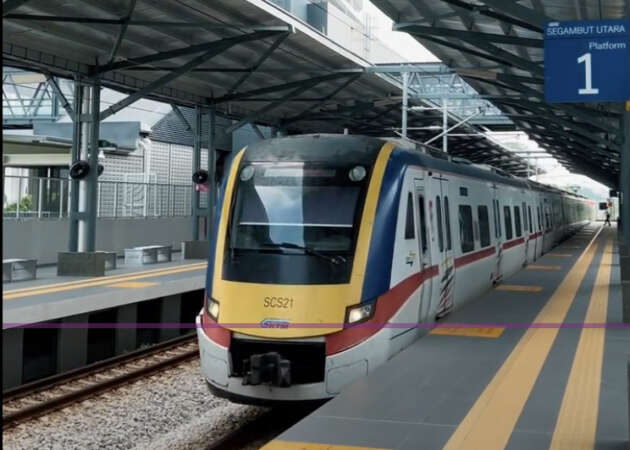
  • Selangor’s RM30 public transport subsidy now includes KTM Komuter – adds to Rapid KL On-Demand, Kumpool

    Selangor’s RM30 public transport subsidy now includes KTM Komuter – adds to Rapid KL On-Demand, Kumpool

    The Selangor state government has announced that its RM30 a month public transport subsidy now includes the KTM Komuter. Prior to this, the subsidy only applied to Rapid KL On-Demand and Kumpool, which are first/last mile van services.

    Exco of investment, trade and mobility Ng Sze Han said that this widening will allow the subsidy to reach more users. Currently, 90% of subsidy recipients choose Rapid KL On-Demand and the largest age group is those between 26 and 35, which is 35% of all users.

    “By including KTM Komuter into the scheme, we’re targeting bigger impact to the community in Selangor and encouraging people to take advantage of the public transport network as a whole,” he said in a statement yesterday.

    The state’s public transport subsidy – which is under the Pakej Daya Tahan Selangor initiative to assist with cost of living – has a quota of 50,000 units. To benefit, one must be a registered voter in Selangor. Again, it’s not based on one’s address or workplace, but your voting location. Applications must be done via the Nine app and once approved, RM30 will be credited into the user’s Nine e-wallet.

    Selangor has many towns covered by the KTM Komuter’s two lines: Batu Caves – Pulau Sebang and Tanjung Malim – Pelabuhan Klang. The subsidy also applies on the Northern Sector (Ipoh – Butterworth and Padang Besar – Butterworth) and the latest Shuttle Selatan in Johor.

     
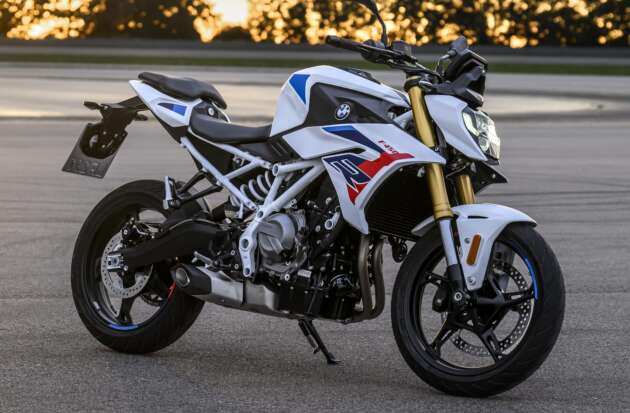
  • BMW Motorrad launches F 450 R naked sports

    BMW Motorrad launches F 450 R naked sports

    BMW Motorrad has introduced the new 2027 BMW Motorrad F 450 R, a 48 hp naked sports bike powered by a 420 cc parallel-twin and developed specifically for road use. Joining the F 450 GS (priced at RM40,000 in Malaysia) in BMW’s new middleweight range, the F 450 R gets its own road-focused chassis and styling inspired by the larger S 1000 R, while pricing and market availability are yet to be announced.

    The F 450 R gets a fuel-injected parallel-twin producing 48 hp at 8,750 rpm and 43 Nm of torque at 6,750 rpm with a 135-degree crankpin offset designed to give the engine a distinctive character and sound. BMW says 80% of maximum torque is available from 3,000 rpm.

    The engine meets Euro 5+ requirements and returns a claimed 3.8 litres/100 km, while the 14-litre tank provides more than 350 km of range while service intervals are set at 10,000 km. Power goes through a six-speed gearbox and left-side X-ring chain drive, and Shift Assistant Pro – a.k.a. a quick shifter – is fitted to all variants except the Base, where it can be added as an option, with the shift pattern reversible for riders wanting a racing shifter.

    The range-topping “M Sport” model also gets BMW’s Easy Ride Clutch (ERC), which automatically operates the clutch according to engine speed. Combined with Shift Assistant Pro, it allows for clutch-free starts and gear changes.

    Coming with a tubular steel space frame with the engine acting as a load-bearing element, BMW Motorrad has retuned the F 450R’s chassis specifically for road use, with geometry aimed at agile handling and direct feedback. Suspension consists of a 43 mm KYB upside-down fork and an aluminium hollow-cast double-sided swingarm with a KYB monoshock. while Sport Suspension adds compression and rebound adjustment to the fork.

    BMW Motorrad launches F 450 R naked sports

    Lightweight cast-aluminium wheels carry 110/70-17 front and 150/60-17 rear tubeless tyres. Braking is done with a 310 mm diameter front disc with a Brembo four-piston monobloc calliper and a 240 mm rear disc with a ByBre single-piston calliper.

    The standard riding aids package includes ABS Pro, Dynamic Brake Control (DBC), Dynamic Traction Control (DTC), engine drag torque control (MSR) and Rain, Road and Dynamic riding modes. All versions also get a 790 mm tall seat, full LED lighting, a 6.5-inch TFT display with phone, music and navigation functions, plus a USB-C charging port.

    BMW Motorrad launches F 450 R naked sports

    The range starts with the F 450 R Base, finished in Cosmic Black, using standard suspension, with Shift Assistant Pro available as an extra cost option. The Exclusive, also in Cosmic Black, adds Shift Assistant Pro and Sport Suspension.

    The M Sport mode variant gets Snaefell White/M Motorsport colours, a white frame and M-colour rim stickers, along with Riding Modes Pro on top of the Exclusive specification which adds Sport display screens and a lap timer. The range-topping M Sport with Innovation Package adds Easy Ride Clutch (ERC) to the M Sport equipment.

     
  • Five screening points for vehicles going to SIC for F1

    Five screening points for vehicles going to SIC for F1

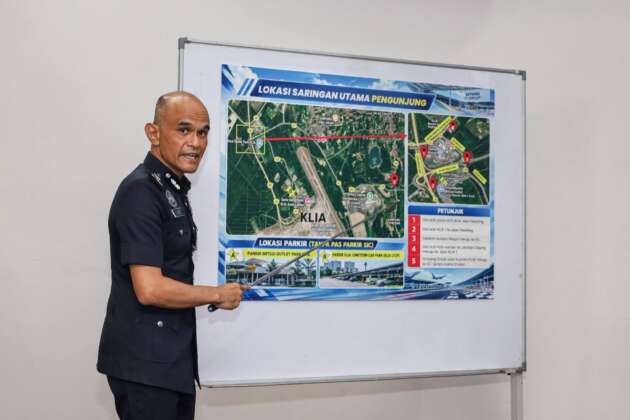
    There’ll be five screening points for all vehicles going to the Sepang International Circuit (SIC) for the historic 2026 Formula 1 (F1) Gulf Air Bahrain Grand Prix in Malaysia, Bernama reports.

    These are the route from the Kuala Lumpur International Airport (KLIA) toll plaza towards Jalan Pekeliling; from KLIA1 towards Jalan Pekeliling; before the Masjid Roundabout towards SIC; from Kota Warisan towards Labohan Dagang and Jalan KLIA1; and the junction of Jalan Kuarters KLIA towards SIC at the Enstek traffic lights.

    “Vehicles heading to SIC will be screened for tickets, vehicle passes and access stickers before visitors are allowed to enter the circuit,” Selangor police chief Datuk Shazeli Kahar said, adding that 365 officers and personnel from the Selangor traffic investigation and enforcement department (JSPT) will be deployed for traffic control, congestion prevention patrols, law enforcement and VIP escort duties throughout the event.

    Five screening points for vehicles going to SIC for F1

    The traffic operation will run from 9am to 6pm daily beginning today, October 2, with the main focus on the Sunday, October 4 race. The parking facilities can accommodate 9,000 vehicles across 17 lots, as well as 100 buses.

    “Some 200 e-hailing passes have been issued to Grab, while 100 passes have been allocated to Prestige Lane to pick up and drop off passengers at the Long Term Car Park (LTCP) and selected hotels. Mobility services have also been strengthened with 95 MyRapid shuttle buses operating from four pickup locations, along with 50 shuttle buses operated in partnership with Grab at two designated locations,” said Shazeli.

    He advised those without parking tickets to leave their vehicles near the designated shuttle bus and e-hailing service locations to help ease traffic flow. Strict action, including saman and towing, would be taken against those flouting the rules, particularly motorists parking on road shoulders in restricted areas, he said.

    Five screening points for vehicles going to SIC for F1

    Also, a tidal flow or contra-flow system will be implemented along roughly 13 km of the route between the Masjid Roundabout and SIC, and road users are advised to follow JSPT personnel’s instructions and comply with temporary signs, cones and lane controls throughout the operation.

    “If congestion occurs outside the circuit, motorists travelling from north to south can use alternative routes via the ELITE Expressway, Saujana Putra exit, South Klang Valley Expressway (SKVE) and the KL-Seremban Toll Plaza. Another alternative is the ELITE Expressway, Putrajaya exit, MEX Expressway and the KL-Seremban Toll Plaza,” Shazeli said.

    What about heavy vehicles? The road transport department (JPJ) and the police will control and divert them at eight checkpoints: Masjid Roundabout; the junction in front of the F1 Main Entrance; Jalan KLIA S8/Jalan Pekeliling; Jalan B48-Jalan 1266; Persiaran Teknologi 1-Persiaran Milenia 2; Persiaran Teknologi 2-Persiaran Seri Emas Utama; Jalan Merpati-Jalan Besar Salak; and Jalan Besar Salak-Jalan Kuarters KLIA.

     
  • 2027 Honda Civic Type R debuts – better aero, cooling, handling; more aggressive styling; faster auto rev match

    2027 Honda Civic Type R debuts – better aero, cooling, handling; more aggressive styling; faster auto rev match

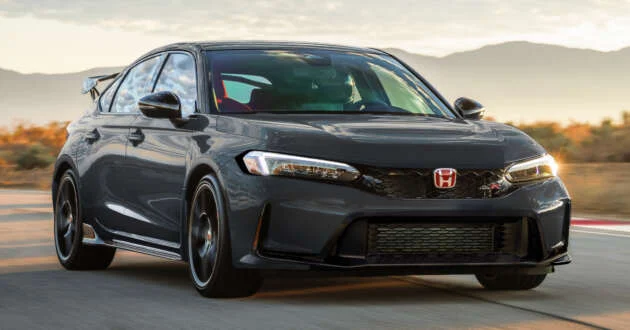
    Over four years after its debut, the sixth-generation (FL5) Honda Civic Type R has been given a mid-cycle refresh that brings with it more aggressive styling, aero and cooling improvements as well as better driving dynamics. First debuting in the United States for the 2027 model year, the updated Civic Type R will arrive at dealerships with a manufacturer’s suggested retail price of USD48,695 (about RM199k).

    Starting on the outside, the Civic Type R receives a revised front fascia that features a deeper front splitter for increased downforce. You’ll also notice the larger lower intake that promotes improved airflow velocity by reduce turbulence, which Honda says increases engine cooling for sustained performance during demanding track driving. For 2027, the hot hatch gains a new Meteorite Grey colour that joins Boost Blue Pearl, Sonic Gray Pearl and Championship White.

    Meanwhile, the suspension damping in +R mode has been optimised to improve road-following performance, while also cutting down on bouncing and impact harshness for more stability and enhanced handling.

    Under the bonnet, there’s a new cover for the 2.0 litre turbocharged inline-four petrol engine that continues to serve up 315 hp and 420 Nm of torque to the front wheels. This is still matched to a six-speed manual transmission with a rev match function, the latter improved to deliver faster engine response for smoother downshifts. Brake feel is also enhanced thanks to a yoke spring being added to the brake pedal to suppress play in the link and provide a more direct feel.

    Beyond the mechanical changes, the CTR receives heated sport seats for the first time. These are perforated and come with a new pattern on their suede-like upholstery, while other areas of the cabin feature an Ultrasuede upper, a combination of black and dark grey trim and a dark grey aluminium shift knob.

    The list continues with an auto-dimming rearview mirror, a Google built-in touchscreen infotainment system with Alexa support, USB-C ports, an improved dual-tone horn as well as an enhanced Honda Sensing suite. The last item includes autonomous emergency braking with increased system visibility for motorcycles and bicycles that add on to the existing pedestrian detection, while adaptive cruise control offers better response.

    The lane keeping assist system also provides improved control over road camber and other disturbances for smoother operation, and the CTR gets post-collision braking for the first time to help mitigate damage from multi-crash collisions.

     
  • 2026 ZXMoto 500RR deliveries start in Malaysia, ZXMoto 500F and 820RR arriving end-October

    2026 ZXMoto 500RR deliveries start in Malaysia, ZXMoto 500F and 820RR arriving end-October

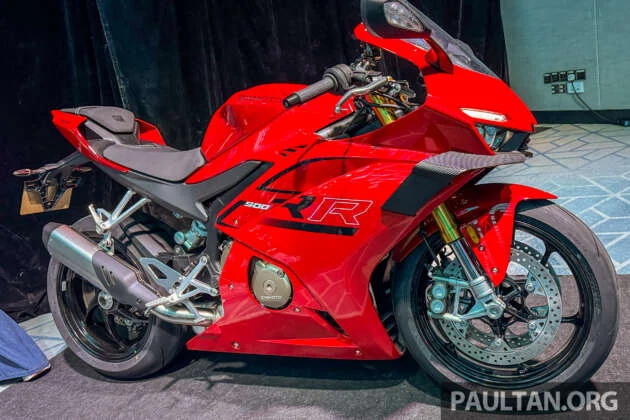
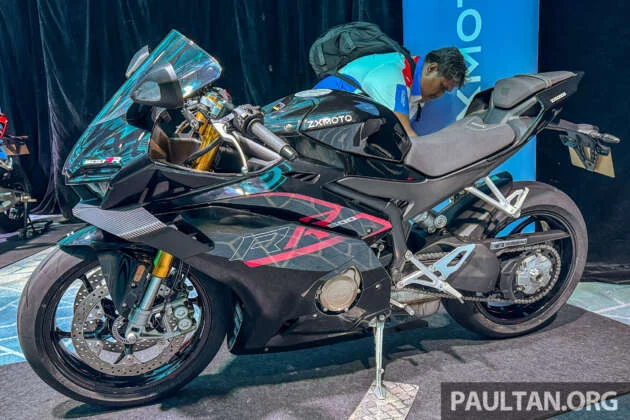
    The ZXMoto 500RR is now arriving at Malaysian dealerships, with first customer deliveries beginning this week, while the 500F and 820RR are expected to reach the local market by the end of October. ZXMoto Malaysia says the first batch of 500RR units is being distributed in phases to authorised dealerships nationwide.

    Customers who have already placed bookings can contact their respective dealers for updates on unit arrival and handover arrangements. Priced at RM29,988, excluding road tax, insurance and registration, the 500RR is the sportiest version of ZXMoto’s 470 cc four-cylinder platform introduced in Malaysia.

    The 500RR is powered by a 470 cc liquid-cooled, DOHC inline-four producing 84 hp at 13,500 rpm and 46 Nm at 11,500 rpm. Power is sent through a six-speed transmission, with a slipper clutch and bidirectional quickshifter.

    Suspension comprises of a 41 mm upside-down front fork and rear monoshock, complemented by a steering damper. Braking hardware consists of twin 300 mm front discs with four-piston callipers and a 220 mm rear disc, with dual-channel ABS.

    Joining the 500RR is the 500F, a naked-bike version of the platform priced at RM28,888. Its 470 cc inline-four, identical to the unit used in the 500RR, produces 73.4 hp at 11,000 rpm and 48 Nm at 9,500 rpm, with a six-speed gearbox. The 500F gets an upside-down front fork, twin front disc brakes, dual-channel ABS and traction control. It has a 15.5-litre fuel tank, 795 mm seat height and 175 kg kerb weight.

    2026 ZXMoto 500RR deliveries start in Malaysia, ZXMoto 500F and 820RR arriving end-October

    Meanwhile, the flagship 820RR sports bike , priced at RM39,888, uses an 818.8 cc three-cylinder engine producing 135 hp at 12,000 rpm and 80 Nm at 9,500 rpm. The 820RR features a six-speed transmission, slipper clutch and bidirectional quickshifter, fully adjustable suspension and twin 320 mm front brake discs.

    Its electronics package includes riding modes, traction control, switchable ABS, TPMS, cruise control, keyless operation, Bluetooth connectivity and TFT instrumentation. All three motorcycles were launched in Malaysia on September 13, 2026.

     
  • Aston Martin DBX GT – 727 PS 4.0L turbo V8 from DBX S; more refined styling, chassis, gearbox and exhaust tune

    Aston Martin DBX GT – 727 PS 4.0L turbo V8 from DBX S; more refined styling, chassis, gearbox and exhaust tune

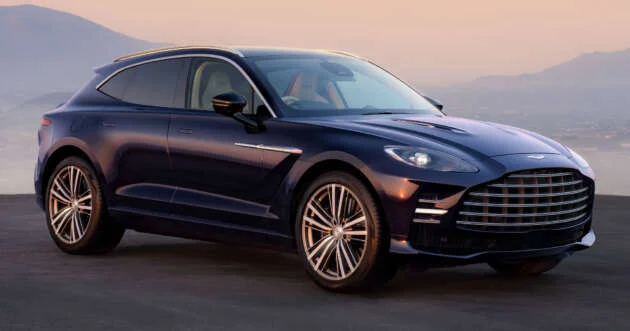
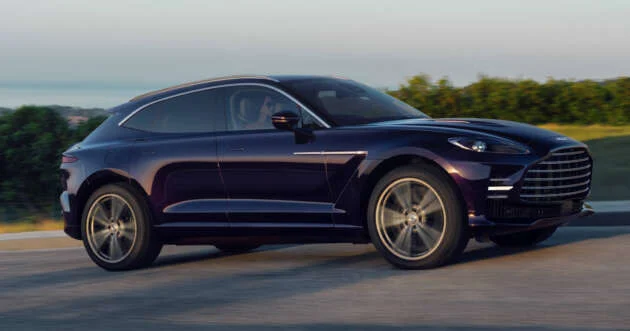
    The Aston Martin DBX GT has joined the British marque’s SUV line-up as a more luxury-oriented derivative alongside the more overtly sporty DBX S, with exterior styling and interior appointments to reflect the new chassis setup aimed at providing more compliance without losing driver engagement.

    Said to deliver “the ultimate in luxury and refinement” from the marque, the DBX GT wears a visually restrained exterior relative to the DBX S, somewhat alike the approach taken by rival marque Bentley with the Bentayga S and Mulliner variants.

    Headline figures from its 4.0 litre biturbo V8 petrol engine are unchanged from the DBX S, with 727 PS and 900 Nm sent to all four wheels through the nine-speed automatic transmission, enabling the same 0-96 km/h time of 3.1 seconds while top speed is 309 km/h.

    Braking hardware is the same as that of the DBX S, with carbon-ceramic units featuring 420 mm discs in front and 390 mm discs at the rear. Its steering ratio is also shared with the DBX S, and provides a turning circle of 12 metres, says Aston Martin.

    Where the refinement-oriented changes come are in the revised calibration of the dampers, including a damper valve system unique to the DBX GT for improved ride compliance over poor surfaces while body control is maintained during dynamic driving.

    The new suspension damper valving is aimed at better managing oil flow during high frequency, low amplitude inputs such as on rough road surfaces or rumble strips, and to reduce vibrations transmitted into the cabin.

    Spring rates change depending on the drive mode selected, while two new longitudinal dampers help to manage the connection between the body and rear subframe for a better feel of structural integrity during suspension inputs such as large potholes, sharp crests and severe compressions, says Aston Martin.

    Aston Martin DBX GT – 727 PS 4.0L turbo V8 from DBX S; more refined styling, chassis, gearbox and exhaust tune

    Further improvement in low-speed ride refinement and compliance comes from standard-fit 22-inch wheels, though 23-inch rollers – shod in summer or all-season tyres – continue to be available to specify.

    Also revised for improved refinement is the calibration of the nine-speed automatic transmission, aimed at delivering better consistency from relaxed, low-speed urban driving to full-throttle applications. A new transmission mounting bush increases mounting stiffness for better management of transmission movement relative to the vehicle body.

    The theme of improved refinement continues with a dedicated exhaust tune, says the manufacturer; double-mixing of gas flow within the rear exhaust muffler makes for a cleaner, richer tone by reducing the harsher, metallic frequencies. A specially tuned GT mode aims to be discreet, while Sport and Sport + modes restores the full exhaust tone of the DBX GT.

    Inside, the DBX GT gets redesigned front and rear seats with revised cushioning, bolstering and reengineered comfort curves that aim to balance support during dynamic driving and everyday usability, says the marque.

    The rear seats have what Aston Martin calls an “individual” seat layout, which actually retains five seats but places more focus on styling and comfort of the two outer seats.

    These have been styled to more closely align the outer rear seats with the front seats, with extended headrests and bolsters aimed at providing greater comfort for longer journeys, while a panoramic glass roof is standard on the DBX GT for added natural light.

    Interior appointments for the DBX GT are aimed at making an even more luxurious interior, where an anodised metal drive mode rotary controller and secondary switchgear offer a “jewellery quality finish”, says Aston Martin.

    Upholstery configurations are offered in monotone, duo-tone and tri-tone combinations, while embroidery stitching is offered in a pattern unique to the DBX GT. Semi-aniline leather is used; each front seat alone in the DBX GT requires 691 m of thread, 3,297 perforation holes and more than 4.5 hours of craftsmanship, noted the marque.

    Further refinement improvements come from greater attention to cabin sealing, placement of sound-deadening material in the door panels, front and rear wheel arch zones and luggage compartment, as well as the use of acoustic laminated rear side glass.

    Deep pile carpets serve not just to add to the luxury feel, but also to support acoustic isolation. Aston Martin claims a measurable improvement of 13% in the articulation index, referring to how easy it is to hold a conversation in a moving vehicle.

    Deliveries of the Aston Martin DBX GT are scheduled to start in the fourth quarter of this year.


Sell your car for a higher price, get paid in 24 hours

Latest Fuel Prices

PETROL
BUDI 95 RM1.99
RON 95 RM4.52 (-0.05)
RON 97 RM5.00 (-0.05)
RON 100 RM6.50
VPR RM7.53
DIESEL
BUDI RM2.10
EURO 5 B10 RM5.27 (-0.15)
EURO 5 B7 RM5.47 (-0.15)
Last Updated Oct 01, 2026
Fuel price history →

Tools


Related PaulTan.org Content: News: News | Tech | Featured: Featured | 2025 | Motorsports | Reviews: Reviews