

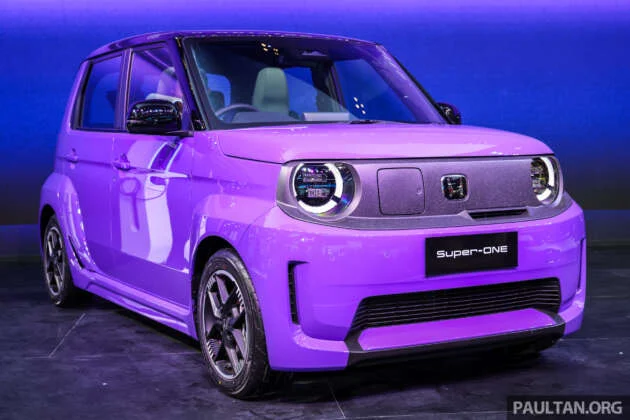
Having gone on sale in Japan and the UK earlier this year, the Honda Super-One is quickly making its way through Southeast Asia. Following debuts in Singapore and Indonesia, the sporty city EV has been launched in Thailand, priced at 990,000 baht (RM122,000).
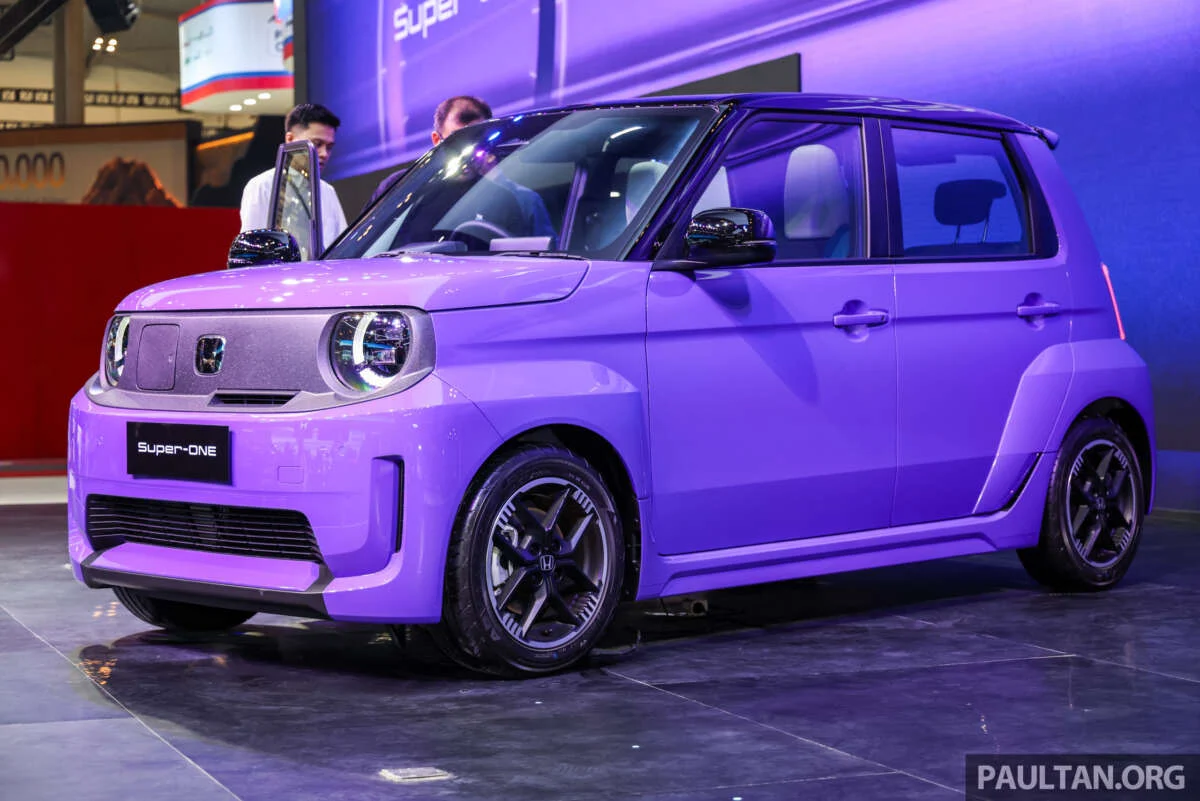
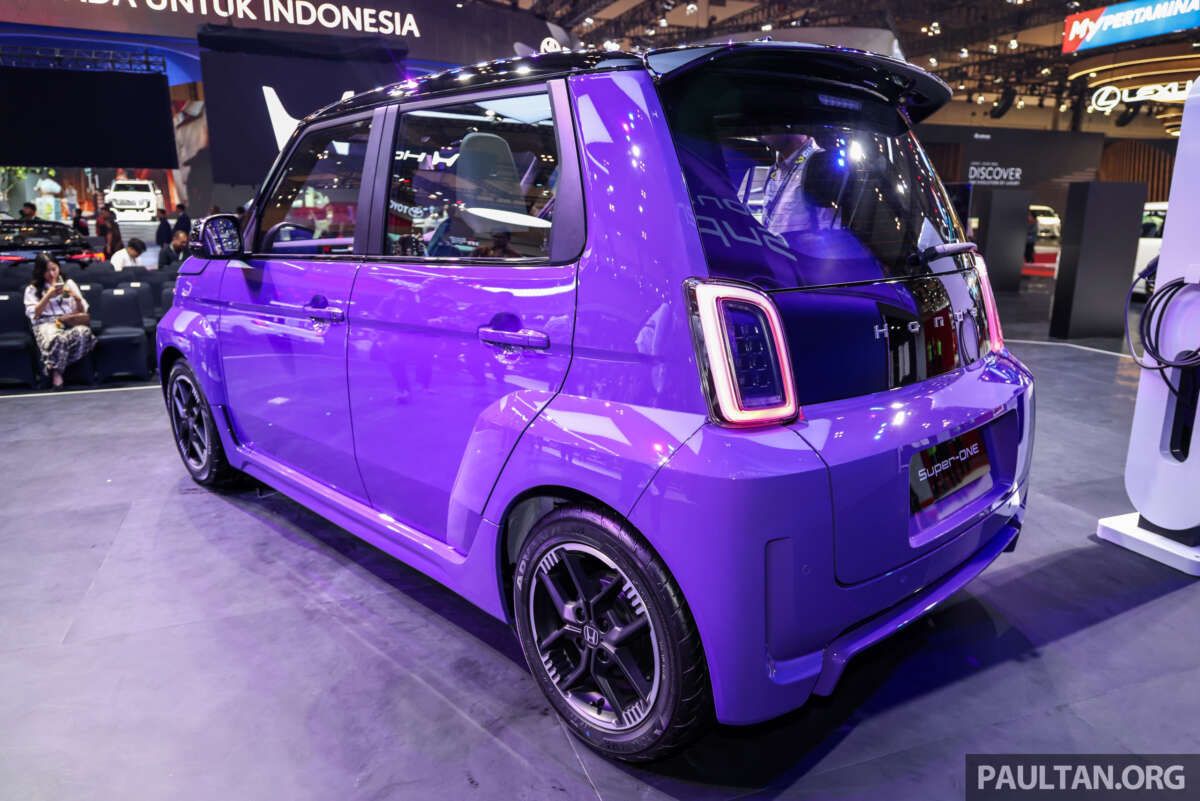
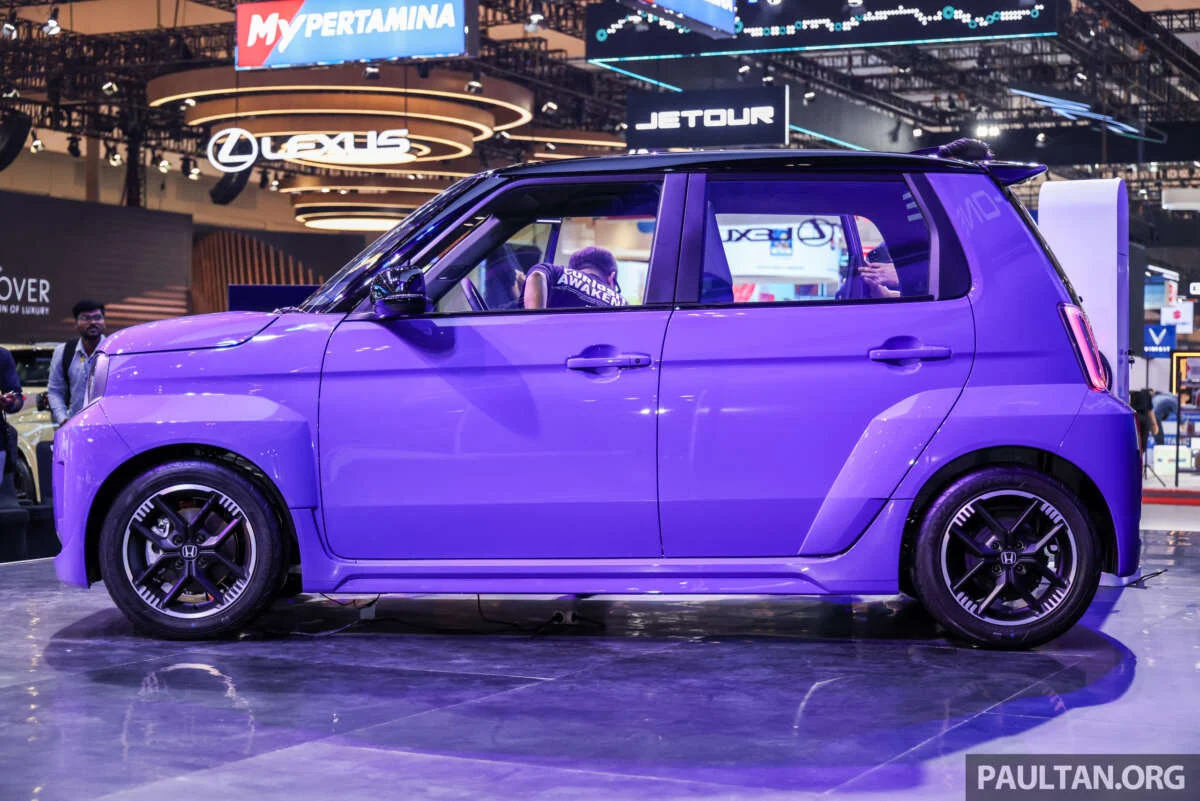
Based on the N-One e: kei car, the Super-One is touted as the spiritual successor to the City Turbo II from the 1980s (not to be mistaken for the far more humdrum current model). To that end, it gets pumped-up wheel arches that push it beyond Japanese city car size limits, while the base car’s round headlights, rectangular taillights and upright body further the impression.
Contrasting with the muscly look, the single front motor seems anaemic at first, producing the same 64 PS (47 kW) and 162 Nm of torque as the N-One e:. However, the car comes with a unique Boost mode that unlocks the full 95 PS (70 kW), as well as enabling a fake engine noise and simulated shifts via steering wheel paddles, akin to the Prelude‘s S+ Shift mode (albeit without an actual engine providing the soundtrack).
Mind you, that extra power does blunt range. Utilising the same 29.6 kWh battery as the N-One e:, the Super-One has a WLTP range of just 205 km. Even on the more lenient Japanese cycle, the car can only muster 275 km, which is 20 km shorter than the N-One e:.
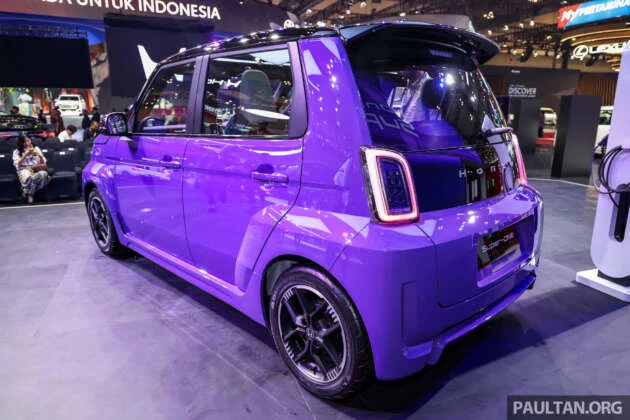
Charging speeds are also nothing to write home about, with the Super-One only supporting a paltry 50 kW of DC fast charging, taking around 30 minutes to charge from 15 to 80%. It will at least support up to 11 kW of AC charging, topping up the battery to the same level in 3 hours.
Taking full advantage of the its small size, Honda has tuned the Super-One’s chassis for more dynamic and responsive handling through extensive testing on various road surfaces in Japan and the UK. This is enhanced by the aggressive Yokohama Advan Fleva V701 tyres, which wrap the distinctive 15-inch eight-spoke alloys, finished in Berlina Black with a machined rim.
Helping it in its cause is a kerb weight of just 1,167 kg, the one upside to the small battery. To put that into perspective, that’s 63 kg lighter than the already featherweight (for an EV) Proton eMas 5 Prime. It is, however, a much smaller car – even unconstrained by kei car regs, the Super-One measures just 3,589 mm long, over half a metre shorter.

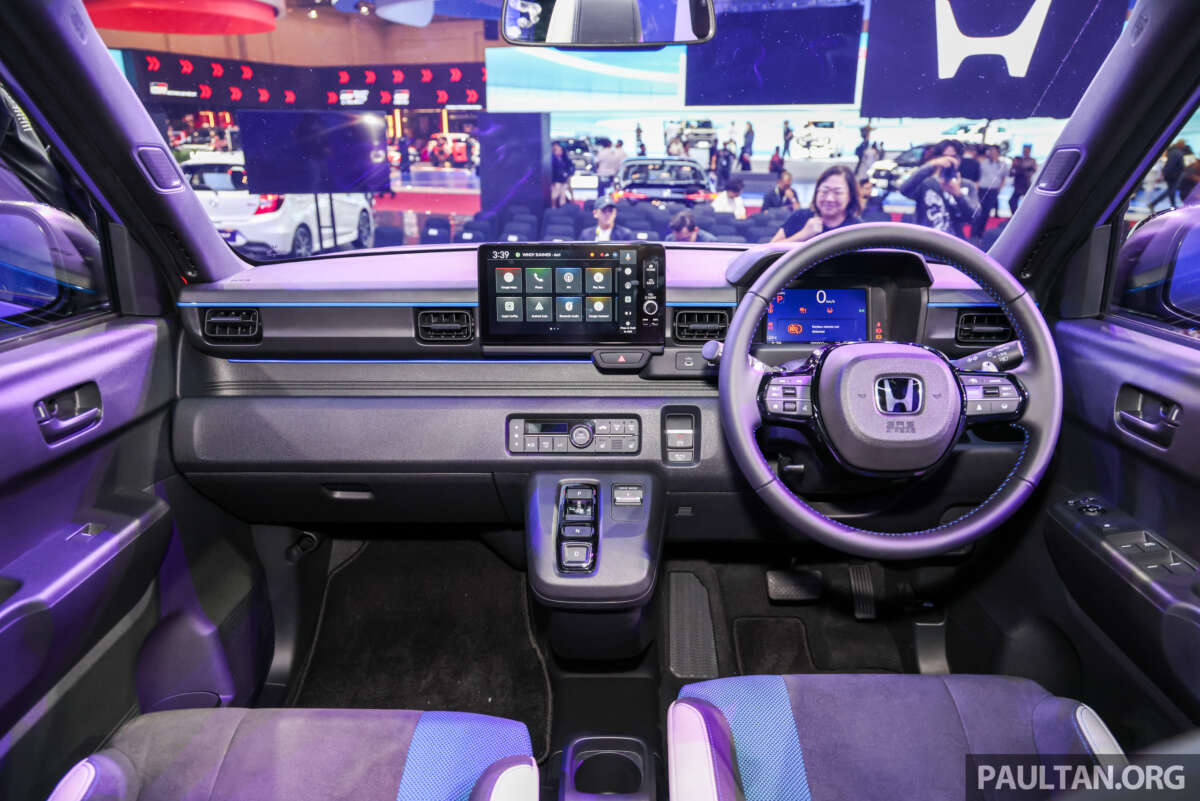
The interior is shared with the N-One e: but with angular black and white sports seats; their increased bolstering and asymmetric blue stripe pay homage to that City Turbo II. There’s also Honda’s standard nine-inch infotainment touchscreen with Apple CarPlay and Android Auto, along with a seven-inch instrument display with a unique three gauge display for battery temperature, power and “revs” when the Boost button is pressed.
That purple button also turns the ambient lighting purple instead of the usual blue. An eight-speaker Bose sound system comes standard – a first for a Honda compact model in Japan, apparently – replete with a 13.1 litre subwoofer under the boot floor.
Just 30 units will be made available in Thailand this year, all finished in rather drab Luminous Grey (no Boost Violet Pearl, as seen on the Indonesian-spec car in these images). Owners can make their car stand out with a choice of two option packs.


The Bulldog package, named after the City Turbo II’s nickname, consists of racing stripes on the bonnet and roof, plus “Bulldog” stickers on the front, side and rear. Together with a tailgate spoiler and 15-inch ME-027 black alloy wheels, it costs 110,000 baht (RM13,600) in total.
Meanwhile, the Mugen package throws on a chin spoiler, side skirts and a rear under spoiler, plus carbon fibre door mirrors and tailgate spoiler, a grille garnish and even fender extensions to enhance the stance. You can also add a graphics package with the brand’s iconic black, gold and red stripes, plus a metallic white body wrap and 16-inch FC5 wheels. As you can imagine, this does not come cheap, altogether costing a cool 640,000 baht (RM78,900).
While our neighbours have all the fun, us Malaysians can only watch from the sidelines. The Super-One was earmarked for our market as a slightly pricey toy, but the reintroduction of import and excise duties for EVs this year put paid to that idea – and MITI’s latest policy with a minimum value and power output buried the proposition entirely.
GALLERY: Honda Super-One at GIIAS 2026













 Honda WR-V
from RM94,900
Honda WR-V
from RM94,900  Honda Prelude
from RM278,000
Honda Prelude
from RM278,000  Honda HR-V
from RM115,900
Honda HR-V
from RM115,900  Honda e:N1
from RM149,900
Honda e:N1
from RM149,900  Honda Civic
from RM133,900
Honda Civic
from RM133,900  Honda City Hatchback
from RM85,900
Honda City Hatchback
from RM85,900  Honda CR-V
from RM178,200
Honda CR-V
from RM178,200  Honda Civic Type R
from RM399,900
Honda Civic Type R
from RM399,900  Honda City
from RM84,900
Honda City
from RM84,900 

very small tyre to keep the efficiency and power
honda deserve to go bankrupt, japanese brand with zionist yahudi price
Don’t forget the other scambag, Toyota.
Kesian, warga H in Malaysia cannot get H branded Kei EV eventhough sapport H brand for so long.
You knew they’re very greedy and you knew their history very well it’s just that all along you’ve no choice but today comes your opportunity to choose
They are still recycling parts whatever possible even in their new cars. Look at the door handle, it is from city, jazz, HRV..haizz