
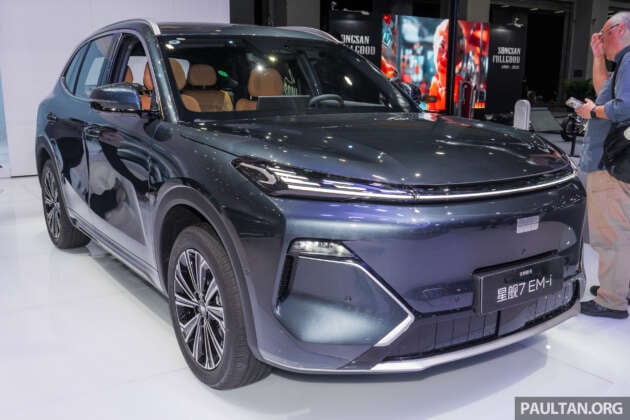
The Geely Starray EM-i, which has already spawned an electric variant in its home market of China, is set to gain range extender version to complement the standard plug-in hybrid. The car has been teased for Thailand wearing the EM-R badge, with the Land of Smiles slated to be the first market to receive it globally, joining the EX2 and EX5 EVs.
No details have been revealed just yet, but we can expect the car to be almost identical to the Starray EM-i (known to you and me as the Proton eMas 7 PHEV). That model is already an REEV of sorts, as its 218 PS/262 Nm electric motor performs the bulk of the propulsion duties, built into the single-speed dedicated hybrid transmission (DHT).
The 99 PS/125 Nm 1.5 litre naturally-aspirated four-cylinder engine instead functions as a generator most of the time, although it can clutch in to drive the car at higher speeds where it is most efficient. Turning this car into an REEV would thus be as simple as removing the aforementioned clutch, severing the mechanical connection to the wheels.

As reference, the EM-i is available with a choice of two batteries – an 18.4 kWh CATL LFP unit with a WLTP-rated EV range of 83 km and a total range of 943 km, as well as a 29.8 kWh Aegis short blade pack for 146 km of EV range and 996 km of combined range. The EM-R will likely deliver a shorter total range on account of it not being able to use the petrol mill to power the wheels, but it won’t be far off.
So, we can expect to get a Proton eMas 7 REEV sooner rather than later then. Not so fast – you see, the EM-R was possibly specially developed to exploit loopholes in Thailand’s EV policy. The country reportedly classifies cars driven purely by electricity as EVs, even if a combustion engine is generating that electricity.

As such, vehicles such as REEVs are exacted a 20% import tax rate compared to the 80% for ICE-driven cars – and that includes PHEVs. It’s the same reason why the forthcoming Nissan Elgrand e-Power (a hybrid that uses only an electric motor to drive the car) is expected to cost less than arch rivals Toyota Alphard and Vellfire Hybrid, Autolifethailand explained.
There’s no such advantage for an REEV in Malaysia, so it’s unlikely that Proton would go through the trouble of creating such a model with no real upsides. That’s especially true given that the Thai-market car will almost certainly be sourced outside Malaysia – even with a locally-assembled engine, electric motor and DHT, the newly CKD eMas 7 PHEV does not have the prerequisite local content to qualify for tax-free ASEAN imports.
GALLERY: Geely Galaxy Starship 7 PHEV in China


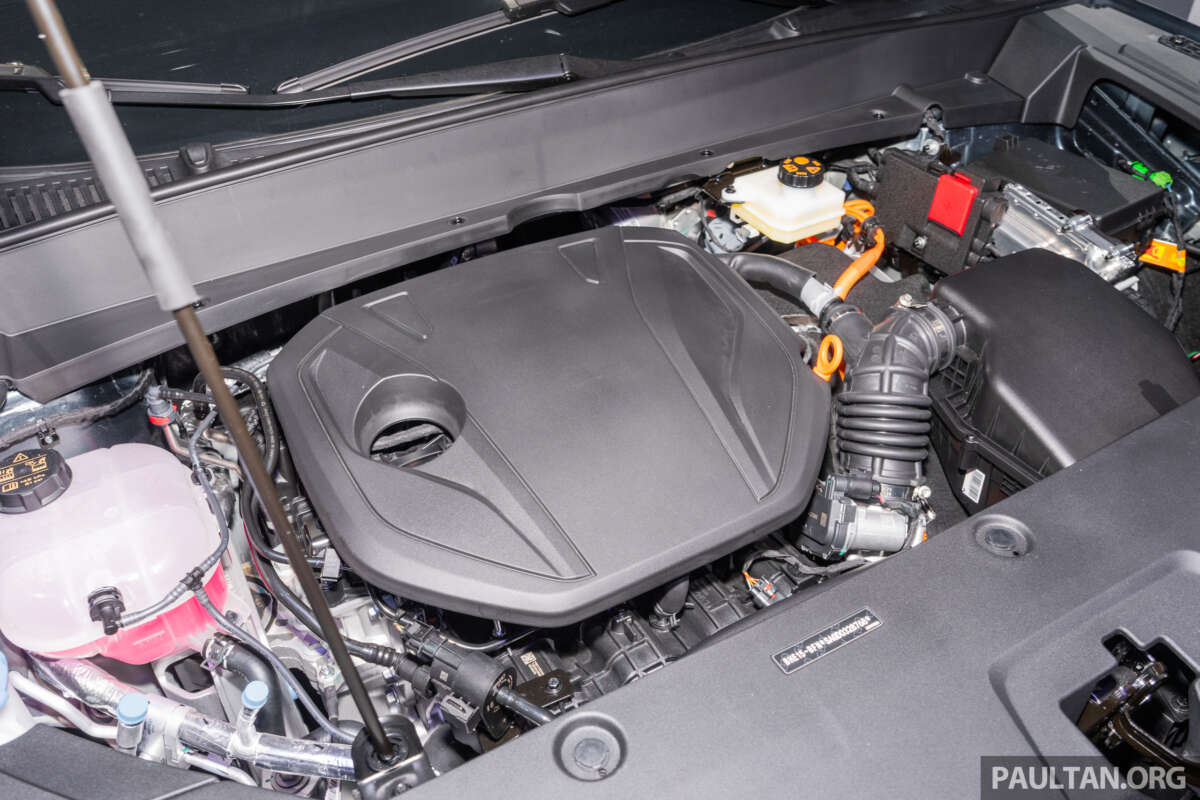


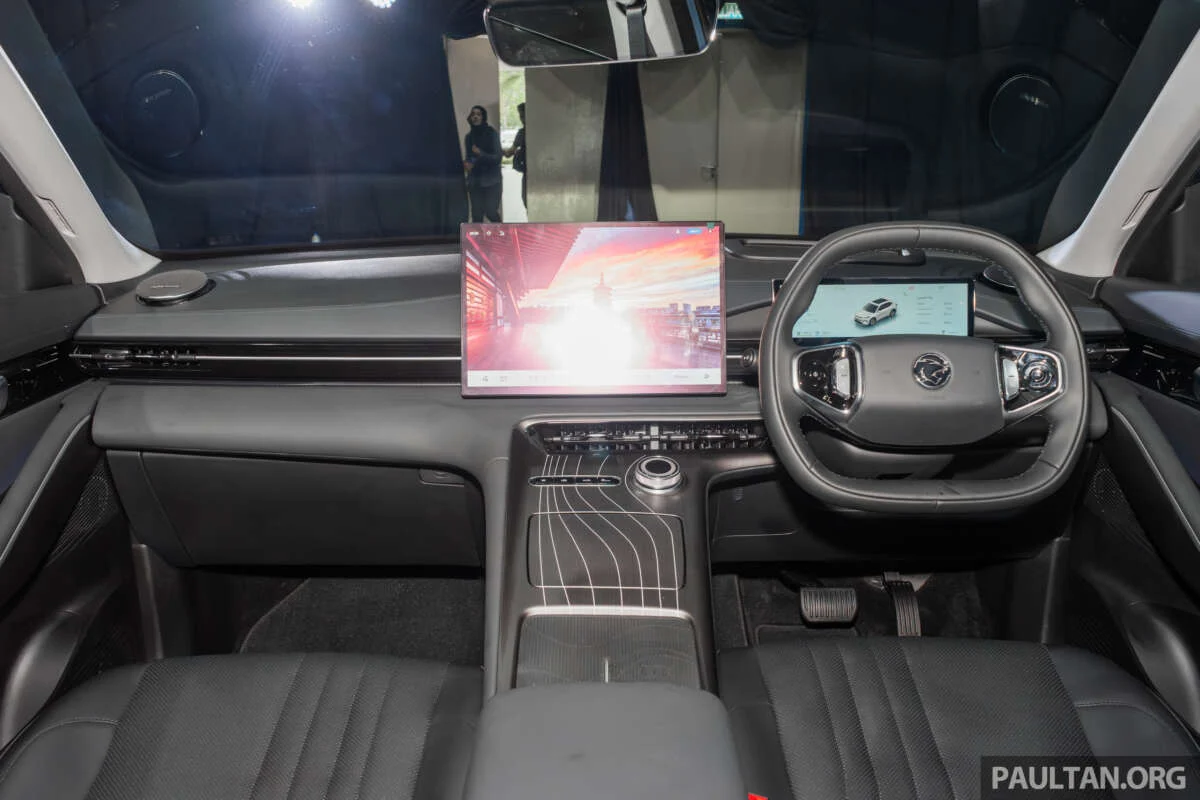
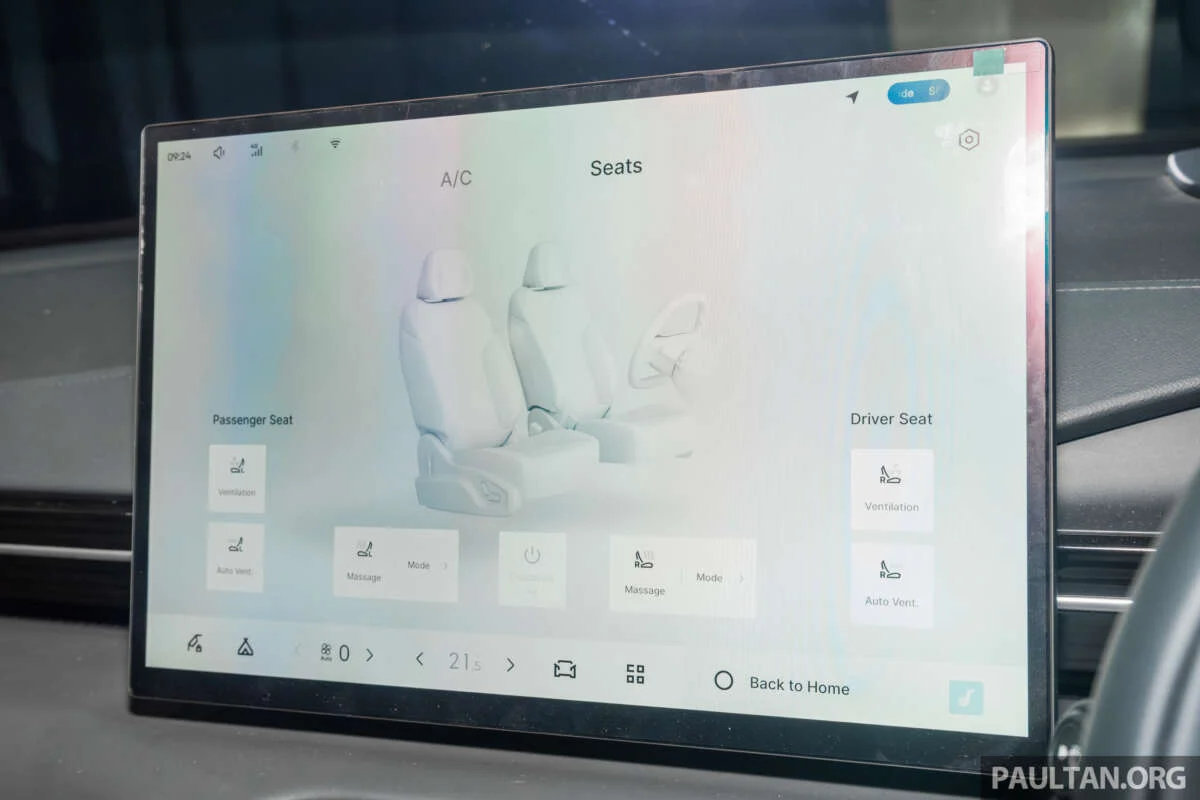
GALLERY: Proton eMas 7 PHEV CKD










Let’s be honest, the rate of change by chinese car maker is very high. they are introducing so many facelift and drive changes, so frequent that i doubt japanese can keep up. i also doubt proton can keep up with changes introduced by Geely. if proton supply chain can’t keep up surely proton’s model will miss some updates or variants. that’s the reality. the fact that proton’s eMAS PHEV or EV not qualified for ASEAN tax-free import is something that proton need to note. perhaps it is not worth the chase in this situation but something to ponder on what proton can do to penetrate our neighbouring markets.
nice, Emas7 REEV 150km EV mode, 1000km combined mode. 2in1 combo
This is more tempting than PHEV, full hybrid version, no need to charge externally.
this is still a PHEV. it comes with a large battery that owners ought to charge.
Malaysians should just buy Perodua Bezza and support MITI cronies like a lapdog