
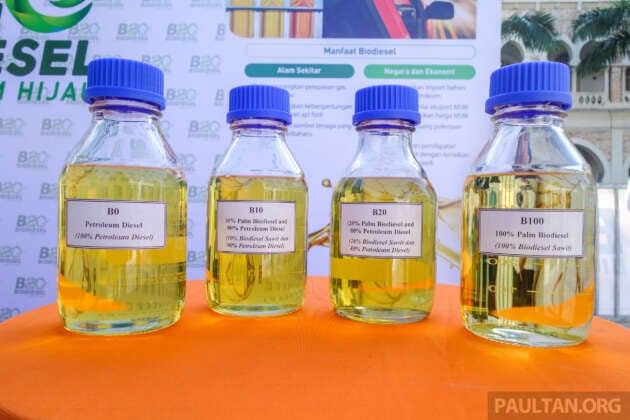
Last week, the government agreed to increase the biodiesel blend rate from B10 to B15, starting with a transition to B12. The change is intended to reduce over-reliance on imported fossil fuels and external markets, while supporting economic restructuring through a switch to renewable energy.
It was mentioned that the move to B15 biodiesel will not incur additional expenses, because it will make use of Malaysia’s existing biodiesel blending infrastructure. As for the infrastructure’s level of readiness for this, economy minister Akmal Nasrullah Mohd Nasir said that over 70% of the blending depots in the country were ready to implement B15 biodiesel through existing facilities, as Bernama reports.
He said the government had conducted meetings and site visits to assess the readiness of facilities to implement B15 biodiesel blend. “Findings from infrastructure inspections of blending depots by the ministry of plantation and commodities show that more than 70% of blending depots in Malaysia are ready to implement B15 biodiesel using existing facilities,” he said.

“Operational adjustments are being developed by blending depots to ensure efficiency and the security of petroleum product supply to consumers,” he said. He added that energy issues can no longer be viewed solely from the perspective of current supply.
“They must be addressed within a national framework that links energy security, the strength of the commodities sector, logistics efficiency, supply chain resilience and the country’s economic resilience,” he said.
Looking to sell your car? Sell it with Carro.



thailand and indonesia already using B40 , any issue ?