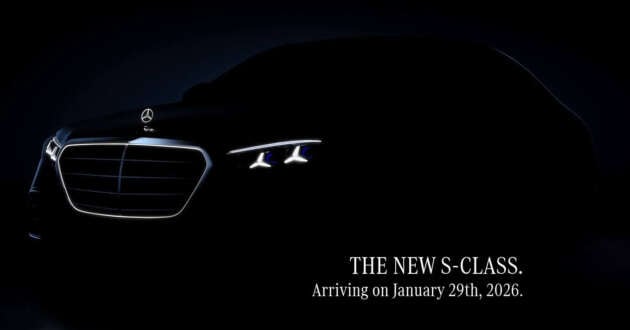
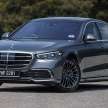
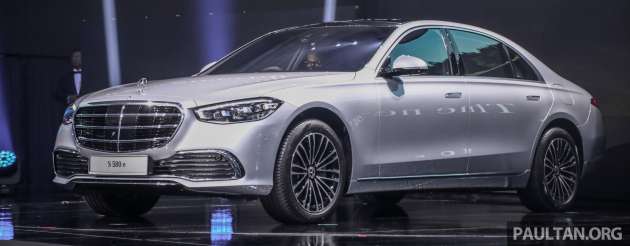
Celebrating 140 years since Karl Benz invented the car, Mercedes-Benz has pulled the covers off the facelifted W223 S-Class. The benchmark luxury sedan has seen a comprehensive makeover, with around 2,700 components – more than 50% of the car, Stuttgart says – being either new or reengineered.
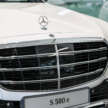
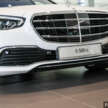
It certainly looks that way from the outside, being almost unrecognisable with a massive grille that’s 20% larger than before, providing space for four slats instead of three. For the first time on an S-Class, the hexagonal surround is illuminated, and it features numerous smaller stars – including on the radar sensor.
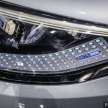
That’s just the start of Mercedes’ rather ostentatious use of the star graphic, which has inflicted every other model but reaches new heights here. The aforementioned bonnet ornament is illuminated as an option, and there are now quadruple stars in the headlights. The lamps are joined to the proboscis via a gloss black frame – a design cue adapted from the W214 E-Class, originating from the EQ series of EVs.

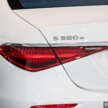
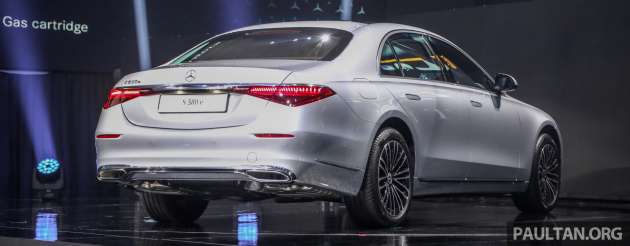
Also lifted from the E-Class are the stars in the taillights, except there are now three stars on each side, joined by a new two-tone black and chrome strip. Completing the array of illumination is the optional welcome light projection along the flanks, rather tastefully incorporating a linear pattern and the Mercedes-Benz script.
The Digital Light micro-LED headlamps have been upgraded with a new chip enabling a 40% increase in the illumination field. The high beams, which project up to 600 metres ahead, can now swivel to optimise coverage in the corners, while the adaptive high beam has been improved to better highlight poorly-lit pedestrians without dazzling oncoming traffic.
The cornering lights also now adapts to more road layouts, aided by camera and navigation data. Users can opt for a projection function, which can now project a snowflake icon in slippery conditions and a light guide on narrow lanes, the latter replacing the construction zone light.

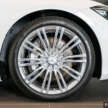
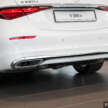
As standard, the S-Class features a slim centre air intake (as a result of the big grille) and diagonal chrome-trimmed inlets on either side, while the rear features more chrome strips and dual integrated exhausts. The AMG Line adds larger “nacelles” on the front bumper corners and an increased use of gloss black on the rear bumper. Wheel options range from 19 to 21 inches in diameter and include intricate new 20-inch high-pressure-cast alloys with 50 (!) cross spokes.
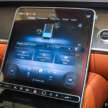
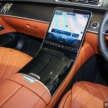
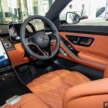
The wholesale revamp continues on the inside, where the S-Class ditches its portrait infotainment touchscreen in favour of the E-Class’ MBUX Superscreen. This combines a larger 14.4-inch centre touchscreen and a 12.3-inch passenger display under a single piece of glass, with the driver instead getting a 12.3-inch freestanding instrument display, optionally available with a 3D effect. Taking a page out of Tesla, the driver’s display is able to show surrounding cars, bikes and pedestrians in 3D.
All this runs on the latest Mercedes-Benz Operating System (MB.OS), featuring a fourth-generation MBUX, a new service-oriented electrical and electronic architecture, Google Maps navigation and an upgraded “Hey Mercedes” voice control with support for generative AI assistants such as ChatGPT and Google Gemini. This extends to the new MBUX Notes feature, which lets you dictate notes hands-free. With the built-in short-term memory, the voice control is able to engage in complex, multi-turn conversations.

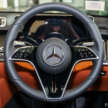
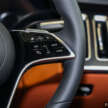
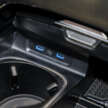
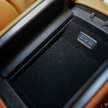
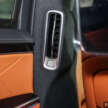
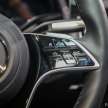
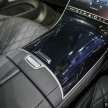
The S-Class also receives new physical rocker and roller controls for the steering wheel, as well as a redesigned centre console with dual Qi wireless chargers, illuminated cupholders and 100-watt USB-C ports. The corner air vents are in a new nozzle-like design, a little reminiscent of a tardigrade’s mouth.
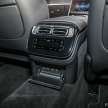
Speaking of which, the vents are powered and can be controlled via the touchscreen, automatically adjusting them to various ventilation settings – although you can still adjust them manually. This feature can optionally be extended to the rear vents as an option. A new electric air filter ionises and removes extremely fine particles, completely purifying the cabin air every 90 seconds.
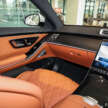
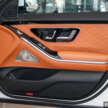
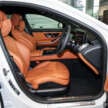
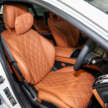
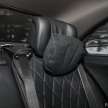
As befits its luxury billing, even the front seats of the S-Class are extremely plush, with 19 motors to provide a whole host of adjustments, as well as heating, ventilation and no less than six massage programmes. But really, it’s the rear seats that are the most important here, and to that end the S-Class comes with upgraded technologies and displays.

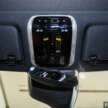
The rear monitors are larger at 13.1 inches across, and there are now twin detachable remote control touchscreens that replace the single tablet. Interior cameras are fitted at the front and on each rear screen, and they can all be used for video calls on Teams.
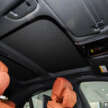
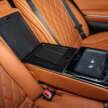
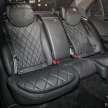
Buyers can choose from four five-seater options – a fixed rear bench, reclining rear seats, Rear Comfort Package with heating, ventilation, a wireless charger and four-zone climate control, and Rear Comfort Package Plus with massage and a built-in passenger-side ottoman. For even greater opulence, there’s the four-seat First Class layout with a full-length centre console, a built-in fridge and fold-out tables.
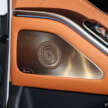
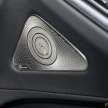
There are also the usual Burmester 3D and 4D surround sound systems (with up to 39 speakers and 1,690 watts of power) available, and you can even now spec the car with heated seat belts that reach 44 degrees Celsius. Mercedes says the latter even helps with safety, as occupants will be more inclined to remove their jackets, making the seatbelts work more effectively.

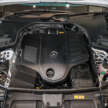
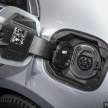
Under the bonnet, the S-Class can be had with a range of updated mild and plug-in hybrid engines. The range starts with an M256 Evo 3.0 litre turbo straight-six that now delivers 381 PS and 560 Nm of torque in the S450 4Matic, and 449 PS and 600 Nm (640 Nm on overboost) in the S500 4Matic. The improvements come as a result of a more powerful electric compressor, optimised intake and exhaust ports and an uprated intake cam, while additional sound-deadening measures increase refinement still further.
As for the diesels, the 313 PS/650 Nm S350d and 367 PS/750 Nm S450d come with an OM656 Evo six-pot with a heated catalytic converter and improved exhaust gas recirculation (EGR) to pass stricter emissions regulations. All engines come with a 48-volt mild hybrid system that utilises a 23 PS integrated starter-generator (ISG) motor.
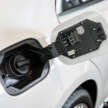
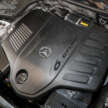
Meanwhile, the 435 PS/680 Nm S450e and 585 PS/750 Nm S580e PHEVs pair the M256 Evo – as well as a particulate filter and pressurised fuel tank, now standard globally – with an more powerful 163 PS motor and an unchanged 28.6 kWh battery, continuing to deliver up to 100 km of pure EV range. But the biggest change is to the range-topping S580 which, as previously reported, gains a Ferrari-style flat-plane crank V8 – akin to the AMG GT Black Series and Aston Martin Valhalla.

The mild hybrid M177 Evo 4.0 litre twin-turbo mill comes with revised intake cams and injection system, optimised intake and exhaust ports and improvements to the compressor wheel and turbocharger housing, helping it to also meet the latest emissions regs without sacrificing power. Outputs have been boosted to 537 PS and 750 Nm, up from 503 PS and 700 Nm with the old cross-plane crank M176. Expect the AMG S63 to feature an uprated version of the same engine, paired with its E Performance PHEV system.
Suspension duties are handled by standard Airmatic air springs, with E-Active Body Control roll stabilisation optional. Both come with a new intelligent damping system that can differentiate between short and sharp road irregularities such as potholes, and long speed bumps common to southern Europe and the US.
To do this, the system relies on crowdsourced data on surface imperfections via vehicle-to-vehicle (V2V) communication, enabling it to adjust the damping proactively. Rear-wheel steering at 4.5 degrees now comes as standard, with the 10-degree system still optional.

The S-Class has always led the way in safety, and this latest model features an upgraded water-cooled supercomputer to power its autonomous driving functions. As standard, MB.Drive Assist is capable of Level 2 semi-autonomy, with Distronic adaptive cruise control, lane centring assist and lane change assist.
The Pro version enables highly-automated point-to-point driving and the ability to stop at stop signs and traffic lights. This feature will be offered in China (where these functions are popular) to start and will be rolled out to other markets once regulations allow.

The MB.Drive Parking Assist can now park diagonally and assist in exiting parking spots even after the car was parked manually, with the Chinese market gaining a reversing assist function already found in most BMWs. The 360-degree camera system is still optional (bewildering for such a large car) but comes with enhanced displays and a soon-to-be-available wheel kerbing warning.
Passive safety has been improved, too, with an updated active restraint system featuring dual-stage front airbags (with a active vent for the passenger) and load limiters, as well as Pre-Safe Impulse seat belt pre-tensioners as standard. A new standard passenger knee airbag joins the one on the driver’s side, leading to a total of 15 airbags available.
-

- Die neue S-Klasse. Stuttgart, 2026. Lackfarbe: MANUFAKTUR black sparkling Exterieur: AMG Line Interieur: MANUFAKTUR tiefweiß / schwarz; Exklusiv-Paket The new S-Class. Stuttgart, 2026. Exterior colour: MANUFAKTUR black sparkling Exterior: AMG Line Interior: MANUFAKTUR deep white/black; Exclusive Package
-

- Die neue S-Klasse. Stuttgart, 2026. Lackfarbe: MANUFAKTUR black sparkling Exterieur: AMG Line Interieur: MANUFAKTUR tiefweiß / schwarz; Exklusiv-Paket The new S-Class. Stuttgart, 2026. Exterior colour: MANUFAKTUR black sparkling Exterior: AMG Line Interior: MANUFAKTUR deep white/black; Exclusive Package
-

- Die neue S-Klasse. Stuttgart, 2026. Lackfarbe: MANUFAKTUR black sparkling Exterieur: AMG Line Interieur: MANUFAKTUR tiefweiß / schwarz; Exklusiv-Paket The new S-Class. Stuttgart, 2026. Exterior colour: MANUFAKTUR black sparkling Exterior: AMG Line Interior: MANUFAKTUR deep white/black; Exclusive Package
-

- Die neue S-Klasse. Stuttgart, 2026. Lackfarbe: MANUFAKTUR black sparkling Exterieur: AMG Line Interieur: MANUFAKTUR tiefweiß / schwarz; Exklusiv-Paket The new S-Class. Stuttgart, 2026. Exterior colour: MANUFAKTUR black sparkling Exterior: AMG Line Interior: MANUFAKTUR deep white/black; Exclusive Package
-

- Die neue S-Klasse. Stuttgart, 2026. Lackfarbe: MANUFAKTUR black sparkling Exterieur: AMG Line Interieur: MANUFAKTUR tiefweiß / schwarz; Exklusiv-Paket The new S-Class. Stuttgart, 2026. Exterior colour: MANUFAKTUR black sparkling Exterior: AMG Line Interior: MANUFAKTUR deep white/black; Exclusive Package
-

- Die neue S-Klasse. Stuttgart, 2026. Lackfarbe: MANUFAKTUR black sparkling Exterieur: AMG Line Interieur: MANUFAKTUR tiefweiß / schwarz; Exklusiv-Paket The new S-Class. Stuttgart, 2026. Exterior colour: MANUFAKTUR black sparkling Exterior: AMG Line Interior: MANUFAKTUR deep white/black; Exclusive Package
-

- Die neue S-Klasse. Stuttgart, 2026. Lackfarbe: MANUFAKTUR black sparkling Exterieur: AMG Line Interieur: MANUFAKTUR tiefweiß / schwarz; Exklusiv-Paket The new S-Class. Stuttgart, 2026. Exterior colour: MANUFAKTUR black sparkling Exterior: AMG Line Interior: MANUFAKTUR deep white/black; Exclusive Package
-

- Die neue S-Klasse. Stuttgart, 2026. Lackfarbe: MANUFAKTUR black sparkling Exterieur: AMG Line Interieur: MANUFAKTUR tiefweiß / schwarz; Exklusiv-Paket The new S-Class. Stuttgart, 2026. Exterior colour: MANUFAKTUR black sparkling Exterior: AMG Line Interior: MANUFAKTUR deep white/black; Exclusive Package
-

- Die neue S-Klasse. Stuttgart, 2026. Lackfarbe: MANUFAKTUR black sparkling Exterieur: AMG Line Interieur: MANUFAKTUR tiefweiß / schwarz; Exklusiv-Paket The new S-Class. Stuttgart, 2026. Exterior colour: MANUFAKTUR black sparkling Exterior: AMG Line Interior: MANUFAKTUR deep white/black; Exclusive Package
-

- Die neue S-Klasse. Stuttgart, 2026. Lackfarbe: MANUFAKTUR black sparkling Exterieur: AMG Line Interieur: MANUFAKTUR tiefweiß / schwarz; Exklusiv-Paket The new S-Class. Stuttgart, 2026. Exterior colour: MANUFAKTUR black sparkling Exterior: AMG Line Interior: MANUFAKTUR deep white/black; Exclusive Package
-

- Die neue S-Klasse. Stuttgart, 2026. Lackfarbe: MANUFAKTUR black sparkling Exterieur: AMG Line Interieur: MANUFAKTUR tiefweiß / schwarz; Exklusiv-Paket The new S-Class. Stuttgart, 2026. Exterior colour: MANUFAKTUR black sparkling Exterior: AMG Line Interior: MANUFAKTUR deep white/black; Exclusive Package

-

- Die neue S-Klasse. Stuttgart, 2026. Lackfarbe: MANUFAKTUR black sparkling Exterieur: AMG Line Interieur: MANUFAKTUR tiefweiß / schwarz; Exklusiv-Paket The new S-Class. Stuttgart, 2026. Exterior colour: MANUFAKTUR black sparkling Exterior: AMG Line Interior: MANUFAKTUR deep white/black; Exclusive Package
-

- Die neue S-Klasse. Stuttgart, 2026. Lackfarbe: MANUFAKTUR black sparkling Exterieur: AMG Line Interieur: MANUFAKTUR tiefweiß / schwarz; Exklusiv-Paket The new S-Class. Stuttgart, 2026. Exterior colour: MANUFAKTUR black sparkling Exterior: AMG Line Interior: MANUFAKTUR deep white/black; Exclusive Package

-

- Die neue S-Klasse. Stuttgart, 2026. Lackfarbe: MANUFAKTUR black sparkling Exterieur: AMG Line Interieur: MANUFAKTUR tiefweiß / schwarz; Exklusiv-Paket The new S-Class. Stuttgart, 2026. Exterior colour: MANUFAKTUR black sparkling Exterior: AMG Line Interior: MANUFAKTUR deep white/black; Exclusive Package
-

- Die neue S-Klasse. Stuttgart, 2026. Lackfarbe: MANUFAKTUR black sparkling Exterieur: AMG Line Interieur: MANUFAKTUR tiefweiß / schwarz; Exklusiv-Paket The new S-Class. Stuttgart, 2026. Exterior colour: MANUFAKTUR black sparkling Exterior: AMG Line Interior: MANUFAKTUR deep white/black; Exclusive Package
-

- Die neue S-Klasse. Stuttgart, 2026. Lackfarbe: MANUFAKTUR black sparkling Exterieur: AMG Line Interieur: MANUFAKTUR tiefweiß / schwarz; Exklusiv-Paket The new S-Class. Stuttgart, 2026. Exterior colour: MANUFAKTUR black sparkling Exterior: AMG Line Interior: MANUFAKTUR deep white/black; Exclusive Package
-

- Die neue S-Klasse. Stuttgart, 2026. Lackfarbe: MANUFAKTUR black sparkling Exterieur: AMG Line Interieur: MANUFAKTUR tiefweiß / schwarz; Exklusiv-Paket The new S-Class. Stuttgart, 2026. Exterior colour: MANUFAKTUR black sparkling Exterior: AMG Line Interior: MANUFAKTUR deep white/black; Exclusive Package
-

- Die neue S-Klasse. Stuttgart, 2026. Lackfarbe: MANUFAKTUR black sparkling Exterieur: AMG Line Interieur: MANUFAKTUR tiefweiß / schwarz; Exklusiv-Paket The new S-Class. Stuttgart, 2026. Exterior colour: MANUFAKTUR black sparkling Exterior: AMG Line Interior: MANUFAKTUR deep white/black; Exclusive Package
-

- Die neue S-Klasse. Stuttgart, 2026. Lackfarbe: MANUFAKTUR black sparkling Exterieur: AMG Line Interieur: MANUFAKTUR tiefweiß / schwarz; Exklusiv-Paket The new S-Class. Stuttgart, 2026. Exterior colour: MANUFAKTUR black sparkling Exterior: AMG Line Interior: MANUFAKTUR deep white/black; Exclusive Package
-

- Die neue S-Klasse. Stuttgart, 2026. Lackfarbe: MANUFAKTUR black sparkling Exterieur: AMG Line Interieur: MANUFAKTUR tiefweiß / schwarz; Exklusiv-Paket The new S-Class. Stuttgart, 2026. Exterior colour: MANUFAKTUR black sparkling Exterior: AMG Line Interior: MANUFAKTUR deep white/black; Exclusive Package
-

- Die neue S-Klasse. Stuttgart, 2026. Lackfarbe: MANUFAKTUR black sparkling Exterieur: AMG Line Interieur: MANUFAKTUR tiefweiß / schwarz; Exklusiv-Paket The new S-Class. Stuttgart, 2026. Exterior colour: MANUFAKTUR black sparkling Exterior: AMG Line Interior: MANUFAKTUR deep white/black; Exclusive Package
-

- Die neue S-Klasse. Stuttgart, 2026. Lackfarbe: MANUFAKTUR black sparkling Exterieur: AMG Line Interieur: MANUFAKTUR tiefweiß / schwarz; Exklusiv-Paket The new S-Class. Stuttgart, 2026. Exterior colour: MANUFAKTUR black sparkling Exterior: AMG Line Interior: MANUFAKTUR deep white/black; Exclusive Package
-

- Die neue S-Klasse. Stuttgart, 2026. Lackfarbe: MANUFAKTUR black sparkling Exterieur: AMG Line Interieur: MANUFAKTUR tiefweiß / schwarz; Exklusiv-Paket The new S-Class. Stuttgart, 2026. Exterior colour: MANUFAKTUR black sparkling Exterior: AMG Line Interior: MANUFAKTUR deep white/black; Exclusive Package

-

- Die neue S-Klasse. Stuttgart, 2026. Lackfarbe: MANUFAKTUR black sparkling Exterieur: AMG Line Interieur: MANUFAKTUR tiefweiß / schwarz; Exklusiv-Paket The new S-Class. Stuttgart, 2026. Exterior colour: MANUFAKTUR black sparkling Exterior: AMG Line Interior: MANUFAKTUR deep white/black; Exclusive Package

-

- Die neue S-Klasse. Stuttgart, 2026. Lackfarbe: MANUFAKTUR black sparkling Exterieur: AMG Line Interieur: MANUFAKTUR tiefweiß / schwarz; Exklusiv-Paket The new S-Class. Stuttgart, 2026. Exterior colour: MANUFAKTUR black sparkling Exterior: AMG Line Interior: MANUFAKTUR deep white/black; Exclusive Package
-

- Die neue S-Klasse. Stuttgart, 2026. Lackfarbe: Hightechsilber metallic Exterieur: AMG Line; Night-Paket Interieur: Exklusives Nappa-Leder macchiatobeige / magmagrau; Exklusiv-Paket The new S-Class. Stuttgart, 2026. Exterior colour: Hightech silver metallic Exterior: AMG Line; Night Package Interior: Exclusive Nappa leather macchiatobeige / magmagrey; Exclusive Package
-

- Die neue S-Klasse. Stuttgart, 2026. Lackfarbe: Hightechsilber metallic Exterieur: AMG Line; Night-Paket Interieur: Exklusives Nappa-Leder macchiatobeige / magmagrau; Exklusiv-Paket The new S-Class. Stuttgart, 2026. Exterior colour: Hightech silver metallic Exterior: AMG Line; Night Package Interior: Exclusive Nappa leather macchiatobeige / magmagrey; Exclusive Package
-

- Die neue S-Klasse. Stuttgart, 2026. Lackfarbe: Hightechsilber metallic Exterieur: AMG Line; Night-Paket Interieur: Exklusives Nappa-Leder macchiatobeige / magmagrau; Exklusiv-Paket The new S-Class. Stuttgart, 2026. Exterior colour: Hightech silver metallic Exterior: AMG Line; Night Package Interior: Exclusive Nappa leather macchiatobeige / magmagrey; Exclusive Package
-

- Die neue S-Klasse. Stuttgart, 2026. Lackfarbe: Hightechsilber metallic Exterieur: AMG Line; Night-Paket Interieur: Exklusives Nappa-Leder macchiatobeige / magmagrau; Exklusiv-Paket The new S-Class. Stuttgart, 2026. Exterior colour: Hightech silver metallic Exterior: AMG Line; Night Package Interior: Exclusive Nappa leather macchiatobeige / magmagrey; Exclusive Package
-

- Die neue S-Klasse. Stuttgart, 2026. Lackfarbe: Hightechsilber metallic Exterieur: AMG Line; Night-Paket Interieur: Exklusives Nappa-Leder macchiatobeige / magmagrau; Exklusiv-Paket The new S-Class. Stuttgart, 2026. Exterior colour: Hightech silver metallic Exterior: AMG Line; Night Package Interior: Exclusive Nappa leather macchiatobeige / magmagrey; Exclusive Package
-

- Die neue S-Klasse. Stuttgart, 2026. Lackfarbe: Hightechsilber metallic Exterieur: AMG Line; Night-Paket Interieur: Exklusives Nappa-Leder macchiatobeige / magmagrau; Exklusiv-Paket The new S-Class. Stuttgart, 2026. Exterior colour: Hightech silver metallic Exterior: AMG Line; Night Package Interior: Exclusive Nappa leather macchiatobeige / magmagrey; Exclusive Package


-

- Die neue S-Klasse. Stuttgart, 2026. Lackfarbe: Hightechsilber metallic Exterieur: AMG Line; Night-Paket Interieur: Exklusives Nappa-Leder macchiatobeige / magmagrau; Exklusiv-Paket The new S-Class. Stuttgart, 2026. Exterior colour: Hightech silver metallic Exterior: AMG Line; Night Package Interior: Exclusive Nappa leather macchiatobeige / magmagrey; Exclusive Package
-

- Die neue S-Klasse. Stuttgart, 2026. Lackfarbe: Hightechsilber metallic Exterieur: AMG Line; Night-Paket Interieur: Exklusives Nappa-Leder macchiatobeige / magmagrau; Exklusiv-Paket The new S-Class. Stuttgart, 2026. Exterior colour: Hightech silver metallic Exterior: AMG Line; Night Package Interior: Exclusive Nappa leather macchiatobeige / magmagrey; Exclusive Package
-

- Die neue S-Klasse. Stuttgart, 2026. Lackfarbe: Hightechsilber metallic Exterieur: AMG Line; Night-Paket Interieur: Exklusives Nappa-Leder macchiatobeige / magmagrau; Exklusiv-Paket The new S-Class. Stuttgart, 2026. Exterior colour: Hightech silver metallic Exterior: AMG Line; Night Package Interior: Exclusive Nappa leather macchiatobeige / magmagrey; Exclusive Package
-

- Die neue S-Klasse. Stuttgart, 2026. Lackfarbe: Hightechsilber metallic Exterieur: AMG Line; Night-Paket Interieur: Exklusives Nappa-Leder macchiatobeige / magmagrau; Exklusiv-Paket The new S-Class. Stuttgart, 2026. Exterior colour: Hightech silver metallic Exterior: AMG Line; Night Package Interior: Exclusive Nappa leather macchiatobeige / magmagrey; Exclusive Package
-

- Die neue S-Klasse. Stuttgart, 2026. Lackfarbe: Hightechsilber metallic Exterieur: AMG Line; Night-Paket Interieur: Exklusives Nappa-Leder macchiatobeige / magmagrau; Exklusiv-Paket The new S-Class. Stuttgart, 2026. Exterior colour: Hightech silver metallic Exterior: AMG Line; Night Package Interior: Exclusive Nappa leather macchiatobeige / magmagrey; Exclusive Package
-

- Die neue S-Klasse. Stuttgart, 2026. Lackfarbe: Hightechsilber metallic Exterieur: AMG Line; Night-Paket Interieur: Exklusives Nappa-Leder macchiatobeige / magmagrau; Exklusiv-Paket The new S-Class. Stuttgart, 2026. Exterior colour: Hightech silver metallic Exterior: AMG Line; Night Package Interior: Exclusive Nappa leather macchiatobeige / magmagrey; Exclusive Package
-

- Die neue S-Klasse. Stuttgart, 2026. Lackfarbe: Hightechsilber metallic Exterieur: AMG Line; Night-Paket Interieur: Exklusives Nappa-Leder macchiatobeige / magmagrau; Exklusiv-Paket The new S-Class. Stuttgart, 2026. Exterior colour: Hightech silver metallic Exterior: AMG Line; Night Package Interior: Exclusive Nappa leather macchiatobeige / magmagrey; Exclusive Package
-

- Die neue S-Klasse. Stuttgart, 2026. Lackfarbe: Hightechsilber metallic Exterieur: AMG Line; Night-Paket Interieur: Exklusives Nappa-Leder macchiatobeige / magmagrau; Exklusiv-Paket The new S-Class. Stuttgart, 2026. Exterior colour: Hightech silver metallic Exterior: AMG Line; Night Package Interior: Exclusive Nappa leather macchiatobeige / magmagrey; Exclusive Package
-

- Die neue S-Klasse. Stuttgart, 2026. Lackfarbe: Hightechsilber metallic Exterieur: AMG Line; Night-Paket Interieur: Exklusives Nappa-Leder macchiatobeige / magmagrau; Exklusiv-Paket The new S-Class. Stuttgart, 2026. Exterior colour: Hightech silver metallic Exterior: AMG Line; Night Package Interior: Exclusive Nappa leather macchiatobeige / magmagrey; Exclusive Package
-

- Die neue S-Klasse. Stuttgart, 2026. Lackfarbe: Hightechsilber metallic Exterieur: AMG Line; Night-Paket Interieur: Exklusives Nappa-Leder macchiatobeige / magmagrau; Exklusiv-Paket The new S-Class. Stuttgart, 2026. Exterior colour: Hightech silver metallic Exterior: AMG Line; Night Package Interior: Exclusive Nappa leather macchiatobeige / magmagrey; Exclusive Package
-

- Die neue S-Klasse. Stuttgart, 2026. Lackfarbe: Hightechsilber metallic Exterieur: AMG Line; Night-Paket Interieur: Exklusives Nappa-Leder macchiatobeige / magmagrau; Exklusiv-Paket The new S-Class. Stuttgart, 2026. Exterior colour: Hightech silver metallic Exterior: AMG Line; Night Package Interior: Exclusive Nappa leather macchiatobeige / magmagrey; Exclusive Package


-

- Die neue S-Klasse GUARD. Stuttgart, 2026. Mercedes‑Benz S 680 GUARD 4MATIC | Energieverbrauch kombiniert: 19,1 l/100 km | CO₂-Emissionen kombiniert: 434 g/km | CO₂-Klasse: G[1] [1] Die angegebenen Werte wurden nach dem vorgeschriebenen Messverfahren WLTP (Worldwide harmonised Light-duty vehicles Test Procedures) ermittelt. Der Energieverbrauch und der CO2-Ausstoß eines Pkw sind nicht nur von der effizienten Ausnutzung des Kraftstoffs bzw. des jeweiligen Energieträgers durch den Pkw, sondern auch vom Fahrstil und anderen nichttechnischen Faktoren abhängig.;Mercedes‑Benz S 680 GUARD 4MATIC | Energieverbrauch kombiniert: 19,1 l/100 km | CO₂-Emissionen kombiniert: 434 g/km | CO₂-Klasse: G* The new S-Class. GUARD Stuttgart, 2026. Mercedes-Benz S 680 GUARD 4MATIC | Combined fuel consumption: 19.1 l/100 km | Combined CO₂ emissions: 434 g/km | CO₂ Class: G[1] [1] The figures provided were determined in accordance with the prescribed WLTP (Worldwide Harmonised Light-Duty Vehicles Test Procedure) measurement method. A vehicle’s fuel consumption and CO2 emissions depend not only on the efficient utilization of fuel or energy source by the vehicle itself, but also on driving style and other non-technical factors.;Mercedes-Benz S 680 GUARD 4MATIC | Combined fuel consumption: 19.1 l/100 km | Combined CO₂ emissions: 434 g/km | CO₂ Class: G*
-

- Die neue S-Klasse GUARD. Stuttgart, 2026. Mercedes‑Benz S 680 GUARD 4MATIC | Energieverbrauch kombiniert: 19,1 l/100 km | CO₂-Emissionen kombiniert: 434 g/km | CO₂-Klasse: G[1] [1] Die angegebenen Werte wurden nach dem vorgeschriebenen Messverfahren WLTP (Worldwide harmonised Light-duty vehicles Test Procedures) ermittelt. Der Energieverbrauch und der CO2-Ausstoß eines Pkw sind nicht nur von der effizienten Ausnutzung des Kraftstoffs bzw. des jeweiligen Energieträgers durch den Pkw, sondern auch vom Fahrstil und anderen nichttechnischen Faktoren abhängig.;Mercedes‑Benz S 680 GUARD 4MATIC | Energieverbrauch kombiniert: 19,1 l/100 km | CO₂-Emissionen kombiniert: 434 g/km | CO₂-Klasse: G* The new S-Class. GUARD Stuttgart, 2026. Mercedes-Benz S 680 GUARD 4MATIC | Combined fuel consumption: 19.1 l/100 km | Combined CO₂ emissions: 434 g/km | CO₂ Class: G[1] [1] The figures provided were determined in accordance with the prescribed WLTP (Worldwide Harmonised Light-Duty Vehicles Test Procedure) measurement method. A vehicle’s fuel consumption and CO2 emissions depend not only on the efficient utilization of fuel or energy source by the vehicle itself, but also on driving style and other non-technical factors.;Mercedes-Benz S 680 GUARD 4MATIC | Combined fuel consumption: 19.1 l/100 km | Combined CO₂ emissions: 434 g/km | CO₂ Class: G*
-

- Die neue S-Klasse GUARD. Stuttgart, 2026. Mercedes‑Benz S 680 GUARD 4MATIC | Energieverbrauch kombiniert: 19,1 l/100 km | CO₂-Emissionen kombiniert: 434 g/km | CO₂-Klasse: G[1] [1] Die angegebenen Werte wurden nach dem vorgeschriebenen Messverfahren WLTP (Worldwide harmonised Light-duty vehicles Test Procedures) ermittelt. Der Energieverbrauch und der CO2-Ausstoß eines Pkw sind nicht nur von der effizienten Ausnutzung des Kraftstoffs bzw. des jeweiligen Energieträgers durch den Pkw, sondern auch vom Fahrstil und anderen nichttechnischen Faktoren abhängig.;Mercedes‑Benz S 680 GUARD 4MATIC | Energieverbrauch kombiniert: 19,1 l/100 km | CO₂-Emissionen kombiniert: 434 g/km | CO₂-Klasse: G* The new S-Class. GUARD Stuttgart, 2026. Mercedes-Benz S 680 GUARD 4MATIC | Combined fuel consumption: 19.1 l/100 km | Combined CO₂ emissions: 434 g/km | CO₂ Class: G[1] [1] The figures provided were determined in accordance with the prescribed WLTP (Worldwide Harmonised Light-Duty Vehicles Test Procedure) measurement method. A vehicle’s fuel consumption and CO2 emissions depend not only on the efficient utilization of fuel or energy source by the vehicle itself, but also on driving style and other non-technical factors.;Mercedes-Benz S 680 GUARD 4MATIC | Combined fuel consumption: 19.1 l/100 km | Combined CO₂ emissions: 434 g/km | CO₂ Class: G*
-

- Die neue S-Klasse GUARD. Stuttgart, 2026. Mercedes‑Benz S 680 GUARD 4MATIC | Energieverbrauch kombiniert: 19,1 l/100 km | CO₂-Emissionen kombiniert: 434 g/km | CO₂-Klasse: G[1] [1] Die angegebenen Werte wurden nach dem vorgeschriebenen Messverfahren WLTP (Worldwide harmonised Light-duty vehicles Test Procedures) ermittelt. Der Energieverbrauch und der CO2-Ausstoß eines Pkw sind nicht nur von der effizienten Ausnutzung des Kraftstoffs bzw. des jeweiligen Energieträgers durch den Pkw, sondern auch vom Fahrstil und anderen nichttechnischen Faktoren abhängig.;Mercedes‑Benz S 680 GUARD 4MATIC | Energieverbrauch kombiniert: 19,1 l/100 km | CO₂-Emissionen kombiniert: 434 g/km | CO₂-Klasse: G* The new S-Class. GUARD Stuttgart, 2026. Mercedes-Benz S 680 GUARD 4MATIC | Combined fuel consumption: 19.1 l/100 km | Combined CO₂ emissions: 434 g/km | CO₂ Class: G[1] [1] The figures provided were determined in accordance with the prescribed WLTP (Worldwide Harmonised Light-Duty Vehicles Test Procedure) measurement method. A vehicle’s fuel consumption and CO2 emissions depend not only on the efficient utilization of fuel or energy source by the vehicle itself, but also on driving style and other non-technical factors.;Mercedes-Benz S 680 GUARD 4MATIC | Combined fuel consumption: 19.1 l/100 km | Combined CO₂ emissions: 434 g/km | CO₂ Class: G*
-

- Die neue S-Klasse GUARD. Stuttgart, 2026. Mercedes‑Benz S 680 GUARD 4MATIC | Energieverbrauch kombiniert: 19,1 l/100 km | CO₂-Emissionen kombiniert: 434 g/km | CO₂-Klasse: G[1] [1] Die angegebenen Werte wurden nach dem vorgeschriebenen Messverfahren WLTP (Worldwide harmonised Light-duty vehicles Test Procedures) ermittelt. Der Energieverbrauch und der CO2-Ausstoß eines Pkw sind nicht nur von der effizienten Ausnutzung des Kraftstoffs bzw. des jeweiligen Energieträgers durch den Pkw, sondern auch vom Fahrstil und anderen nichttechnischen Faktoren abhängig.;Mercedes‑Benz S 680 GUARD 4MATIC | Energieverbrauch kombiniert: 19,1 l/100 km | CO₂-Emissionen kombiniert: 434 g/km | CO₂-Klasse: G* The new S-Class. GUARD Stuttgart, 2026. Mercedes-Benz S 680 GUARD 4MATIC | Combined fuel consumption: 19.1 l/100 km | Combined CO₂ emissions: 434 g/km | CO₂ Class: G[1] [1] The figures provided were determined in accordance with the prescribed WLTP (Worldwide Harmonised Light-Duty Vehicles Test Procedure) measurement method. A vehicle’s fuel consumption and CO2 emissions depend not only on the efficient utilization of fuel or energy source by the vehicle itself, but also on driving style and other non-technical factors.;Mercedes-Benz S 680 GUARD 4MATIC | Combined fuel consumption: 19.1 l/100 km | Combined CO₂ emissions: 434 g/km | CO₂ Class: G*
-

- Die neue S-Klasse mit beleuchtetem Kühlergrill und erstmals beleuchteter Mercedes Stern auf der Motorhaube eines Serienfahrzeugs, Doppelstern-Scheinwerfer, neue Heckleuchten mit chromgefassten Sternen.headlamps, new rear lights with chrome-framed stars. The new Mercedes-Benz S-Class with illuminated grille and optionally illuminated Mercedes star on the bonnet for the first time, twin-star headlamps, new rear lights with chrome-framed stars.
-

- Mercedes-Benz hat das Interieur der neuen S-Klasse in zahlreichen Bereichen weiter verfeinert und setzt damit einen neuen Maßstab für Qualität und Komfort; MBUX Superscreen. Mercedes-Benz has refined the interior of the new S-Class in numerous areas to create a space where technology and craftsmanship meet; MBUX Superscreen.
-

- Mercedes-Benz hat das Interieur der neuen S-Klasse in zahlreichen Bereichen weiter verfeinert und setzt damit einen neuen Maßstab für Qualität und Komfort; MBUX Superscreen.MBUX Superscreen. Mercedes-Benz has refined the interior of the new S-Class in numerous areas to create a space where technology and craftsmanship meet; MBUX Superscreen.

-

- Die neue Mercedes-Benz S-Klasse: Der Sechszylinder-Benzinmotor (M 256 Evo) spricht jetzt noch dynamischer an und bietet ein auf bis zu 600 Nm gesteigertes Drehmoment. Zu den wichtigsten Verbesserungen zählen ein leistungsstärkerer elektrischer Zusatzverdichter, optimierte Ein- und Auslasskanäle sowie eine überarbeitete Einlassnockenwelle. Verbesserte Dämmmaßnahmen sorgen für eine herausragende Geräusch- und Vibrationsdämmung und schaffen so ein außergewöhnlich ruhiges Ambiente bei jeder Geschwindigkeit. Die Plug-in-Hybrid-Variante kombiniert diesen weiterentwickelten Sechszylinder mit einem leistungsstarken Elektromotor, wodurch die Systemleistung im Vergleich zur vorherigen Motorengeneration um bis zu 55 kW steigt und ein noch sanfteres sowie spontan reagierendes Fahrerlebnis ermöglicht. The new Mercedes-Benz S-Class: The six‑cylinder petrol engine (M 256 Evo) now responds even more dynamically, with torque increased up to 600 Nm. Key improvements include a more powerful electric auxiliary compressor, optimised intake and exhaust ports, and a revised intake camshaft. Enhanced insulation measures provide superior noise and vibration damping, creating an exceptionally calm ambience at any speed. The plug-in hybrid option combines this upgraded six-cylinder engine with a powerful electric motor, increasing system output by up to 55 kW over the previous engine generation and delivering an even smoother and more responsive drive.
-

- Die neue Mercedes-Benz S-Klasse: Der neue Sechszylinder-Dieselmotor (OM 656 Evo) wurde für die künftige Abgasgesetzgebung weiterentwickelt. Erstmals in Serie kommt ein elektrisch beheizter Katalysator für eine noch schnellere und effizientere Abgasnachbehandlung zum Einsatz. Modifikationen bei Abgasrückführung, Kühlung und Kurbelgehäuseentlüftung erhöhen die Dauerhaltbarkeit und Effizienz weiter. The new Mercedes-Benz S-Class: The new six-cylinder diesel engine (OM 656 Evo) has been developed to meet future emissions legislation and introduces the first series-production use of an electrically heated catalytic converter for faster and more efficient exhaust aftertreatment. Robustness improvements in Exhaust Gas Recirculation, cooling, and crankcase ventilation further enhance durability and efficiency.
-

- Die Fahrwerksysteme der neuen Mercedes-Benz S-Klasse verfügen über eine intelligente Dämpferregelung. Sie arbeiten in Kombination mit AIRMATIC und E-ACTIVE BODY CONTROL und nutzen Car-to-X-Informationen anderer Mercedes-Benz Fahrzeuge aus der Mercedes Intelligent Cloud für längere Bodenwellen. The suspension systems of the new Mercedes-Benz S-Class features an intelligent damping and work in combination with AIRMATIC and E-ACTIVE BODY CONTROL, using Car-to-X information from other Mercedes-Benz vehicles via the Mercedes Intelligent Cloud for longer speedbumps.
-

- Die Sensoren der neuen Mercedes-Benz S-Klasse. Serienmäßig an Bord: zehn externe Kameras, fünf Radarsensoren, zwölf Ultraschallsensoren und ein wassergekühlter Hochleistungsrechner mit ausreichenden Leistungsreserven für zukünftige Funktionen und regelmäßige Over-the-Air-Updates. The sensors of the new Mercedes-Benz S-Class. Standard on board: ten external cameras, five radar sensors, twelve ultrasonic sensors and a water-cooled supercomputer with sufficient power reserves for future functions and regular over-the-air updates.
-

- Die Sensoren der neuen Mercedes-Benz S-Klasse. Serienmäßig an Bord: zehn externe Kameras, fünf Radarsensoren, zwölf Ultraschallsensoren und ein wassergekühlter Hochleistungsrechner mit ausreichenden Leistungsreserven für zukünftige Funktionen und regelmäßige Over-the-Air-Updates. The sensors of the new Mercedes-Benz S-Class. Standard on board: ten external cameras, five radar sensors, twelve ultrasonic sensors and a water-cooled supercomputer with sufficient power reserves for future functions and regular over-the-air updates.
-

- Die neue Mercedes-Benz S-Klasse – MB.DRIVE: Fortschrittliche Fahr- und Parkassistenzsysteme. The new Mercedes-Benz S-Class – MB.DRIVE: Advanced driving and parking assistance systems.
-

- Die neue Mercedes-Benz S-Klasse: DIGITAL LIGHT with micro-LED technology. The new Mercedes-Benz S-Class: DIGITAL LIGHT mit Micro-LED-Technologie.
-

- Die neue Mercedes-Benz S-Klasse: Scheinwerfer mit DIGITAL LIGHT. The new Mercedes-Benz S-Class: New Headlights with DIGITAL LIGHT.
-

- DIGITAL LIGHT in der neuen Mercedes-Benz S-Klasse: Adaptiver Fernlicht-Assistent Plus. DIGITAL LIGHT in the new Mercedes-Benz S-Class: Adaptive Highbeam Assist Plus.
-

- Die neue Mercedes-Benz S-Klasse: DIGITAL LIGHT mit Projektionsfunktion – Glättewarnung. The new Mercedes-Benz S-Class: DIGITAL LIGHT with projection function – Icy road warning.
-

- Die neue Mercedes-Benz S-Klasse: DIGITAL LIGHT mit Projektionsfunktion – Assistenz bei Fahrbahnverengung. The new Mercedes-Benz S-Class: DIGITAL LIGHT with protection feature – Assistance on narrow road sections.