
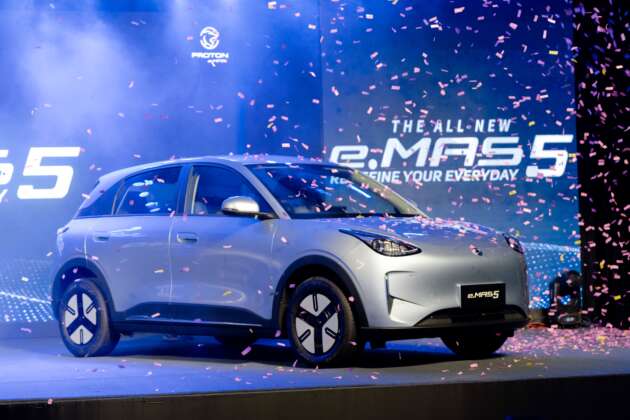
Ahead of Budget 2027‘s October 9 tabling in parliament, the Malaysian Automotive Association (MAA) has proposed personal income tax rebates for the purchase of electrified vehicles (xEV) and voluntary scrapping of old vehicles. xEVs comprise hybrids, plug-in hybrids (PHEV), battery-electric (EV) and fuel-cell vehicles.
MAA president Mohd Shamsor Mohd Zain told Bernama that the association recently submitted a proposal to the finance ministry suggesting a personal income tax rebate between RM7,000 and RM10,000 to accelerate xEV adoption, especially among middle-income taxpayers keen on xEVs but sensitive to the price.
“The move can reduce the upfront cost of xEV ownership and improve affordability for xEVs,” he said, adding that there is currently no direct purchase subsidy or tax rebate available for xEV buyers and that existing relief is mainly limited to charging equipment.

MAA proposed that the current RM2,500 individual income tax relief for home charging expenses be extended beyond 2027.
Shamsor said this would complement existing supply-side incentives by stimulating actual consumer demand rather than relying solely on manufacturers’ incentives, besides supporting Malaysia’s 2030 electrification target by encouraging buyers to bring forward their vehicle replacement decisions.
“This will create stronger market demand for locally-assembled xEVs, supporting manufacturers’ decisions to introduce additional completely-knocked-down (CKD) or locally-assembled xEV models and invest in local production. It will also improve the utilisation of Malaysia’s growing charging infrastructure, creating a positive cycle between EV adoption and charging-network investment,” he said.

MAA also proposed an end-of-life vehicle programme targeting vehicles aged 20 years and up, under which a RM5,000 personal income tax rebate would be offered per vehicle voluntarily retired and scrapped. This would complement the government’s matching grant programme and encourage owners of old cars to switch to newer, safer, more efficient and eco-friendly vehicles.
“The programme will also support fleet renewal, improve road safety, reduce emissions and stimulate domestic automotive demand,” Shamsor said, stressing that scrapping must be done by government-approved facilities.
The association also hopes that the government will consider extending the 100% green investment tax allowance (GITA) to charging point operators’ (CPO) investments and establish an automotive supplier capability development fund.
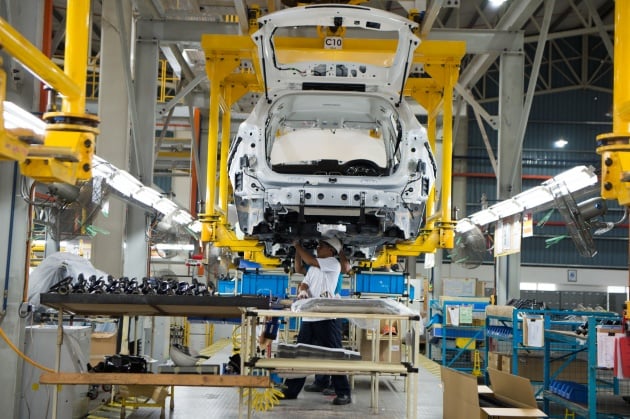
Suppliers are required by OEMs to invest in tooling, testing, validation, certification and automation before receiving any confirmed or sufficient sourcing volumes, and the initial investment could be hard to justify and finance for smaller suppliers, especially in developing xEV-related components, said the MAA president.
“This would assist in the transition towards xEVs, where Malaysian suppliers need to develop new capabilities in areas such as electric powertrain components, battery-related components, electronics, thermal management, lightweight materials and other next-generation automotive technologies.
“Strengthening of Tier 2 and 3 suppliers will help reduce dependence on imported components and build a stronger local automotive supply chain,” he said. What are your thoughts?




Pointless if johari wants to keep cars expensive
Give cash Rm10k for owners of cars over 20 years old,who come forward for volunteer car scrapping.
Sure,plenty of kampong datuk,nenek wouldn’t mind consider scrapping their cars.
The RM5k is only if one is willing to get a new local car!
Are you going to pay for the new car installment and higher insurance premium?
Malaysian income tax rebate to buy China’s produce. Very clever.
Well, considering every car is imported in whether CKD, SKD or CBU except QV-E, makes no difference, isn’t it?
if its japan produce , will it be ok ?
I have 3 questions:
1. Is this tax incentive only for those intending to buy or can it retroactively be used for those who purchased EVs after the special 100% exemption on import duties, excise duties and sales tax was over? Meaning those who didn’t get the benefit of that earlier scheme but bought after.
2. Charging Infrastructure – sorry to say but if you watch videos online, the so-called charging infrastructure doesn’t work half the time. I don’t know if this is something created by social media creators / influencers but if even half of this is true, it is a very scary thought for long-distance drives.
3. My beef about the scrap old car, buy new is simple: you end up paying the monthly installments all over again. It is easy for economists and such groups as MAA to propose this, but think of the costs of re-doing this whole thing all over again. Then think of it for those who are retired or close to retiring. Have to do this whole thing again for the next 9 years. For whose benefit exactly? Definitely not theirs.
I agree with #3. You are spot on…
1. obviously it wont be retroactive.
3. dont like then dont scrap, nobody force u to scrap. think instead of how many people it would benefit.
I would like to rebut the idea of replacing the old cars for a few reasons…see below..
1. Most old cars are used by retired people. If they change cars, who is going to pay the monthly installments?( Will Antony Like or Anwar Ibrahim pay, or will the MAA pay?)
2. The insurance premiums will be more expensive!!..again who pays?
3..The old cars have mechanical switches and can be easily activated by muscle memory.
4. New cars have software settings and one has to read and set it by touch screen!
5. What percentage of yearly accidents is caused by old cars?
6. What percentage of of yearly accidents are old cars involved?
7. What is the age of cars in the highest percentage of accidents?
MAA…do not be a moron!!
u are the moron. dont like then dont scrap ur old car, nobody forced u to scrap. its optional scheme and would definitely benefit many people who are planning to change old car for new.