
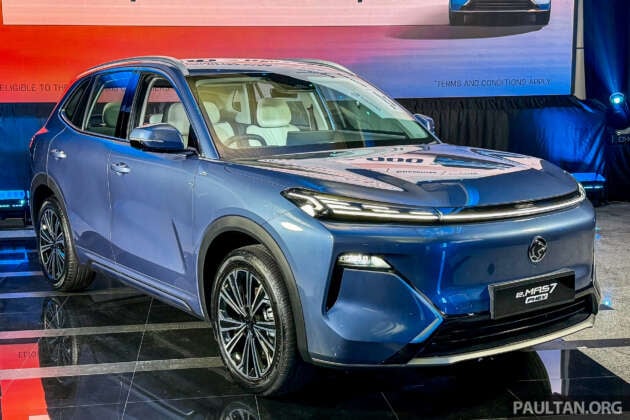
You already know all there is to know about the Proton eMas 7 PHEV from a product and variant standpoint, and now, the first eMas with an engine and exhaust pipe (sorry, we don’t think we’re going to call it a “dual-powered EV”) is open for booking in Malaysia. Also, no more camo, so feast your eyes on this avalanche of photos – in the flesh at last!
The estimated price is between RM110k and RM130k and the launch will be in February ahead of deliveries soon after. Of course, there’s an early-bird package – book the eMas 7 PHEV for just RM99 and get a RM500 booking fee rebate if your car is one of the first 5,000 to be successfully registered.
Now, because the eMas 7 PHEV isn’t actually launched yet, the RM129,800 Chery Tiggo 7 PHEV is still Malaysia’s cheapest PHEV for now. We expect the final prices to be below the estimated ones, of course, so let’s wait for the launch to officially declare it the country’s most affordable plug-in hybrid.
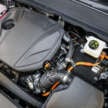
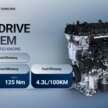
Essentially a Geely EX5/Starray/Galaxy Starship 7 EM-i, the China-imported (CBU) eMas 7 PHEV sees a 99 PS/125 Nm 1.5 litre BHE15-DFN non-turbo engine join forces with a 218 PS/262 Nm front motor to send a combined output of 262 PS and 262 Nm of torque to the front wheels.
The petrol engine is closely related to the Saga MC3’s BHE15-CFN. Still port-injected, but it’s been made simpler and lighter for higher efficiency, runs on an Atkinson cycle full time as opposed to part time, has just single- instead of dual-VVT, and features efficient exhaust gas recirculation (EGR).
Furthermore, the engine’s lack of an auxiliary belt minimises parasitic losses – no belt-driven air-con compressor and inverter. And like the Saga, it uses a timing chain so there’s no timing belt either. The engine’s thermal efficiency is 46.5% – slightly lower than in China, which gets an updated version that’s more efficient and more powerful – 111 PS and 136 Nm of torque.
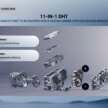
An 11-to-1 electrified dedicated hybrid transmission (E-DHT) combines a P1 integrated starter-generator and P3 traction motor. The system works similar to Honda’s e:HEV in that the car is driven primarily by electricity but the engine can be clutched in at higher speeds, when petrol power is more efficient. It’s a series-parallel plug-in hybrid and not an EV, so it’ll have engine size-based road tax and wear black number plates.
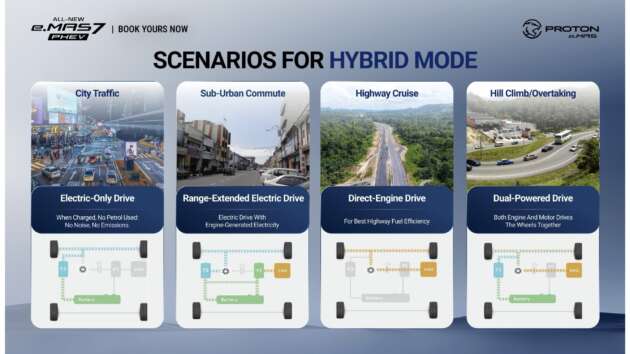
The engine can charge the battery up to a limit of 85%, and at the other end of the scale, the system protects the battery by not allowing the state of charge to dip below 20%. The battery is an LFP pack – Proton strongly recommends that customers plug it in to fully charge the battery once a week to prolong battery health.
There are Prime, Premium and Premium Plus variants. The bottom two get an 18.4-kWh CATL LFP battery, an 83-km EV range, a 943-km combined range, DC charging up to 30 kW (30-80% in under 20 minutes) and an eight-second 0-100 km/h time.
The range-topping Premium Plus gets a 29.8-kWh Geely Aegis short blade LFP battery, a 146-km EV range, a 996-km combined range, DC charging up to 60 kW (30-80% in under 16 minutes) and an 8.2-second century sprint time.
All ranges quoted above are on the more-realistic WLTP cycle – Proton has, in a departure from usual, chosen to market this model using NEDC figures, clearly to more closely match its rivals. The combined NEDC ranges are 1,065 km for the Premium Plus and 1,000 km for the Prime and Premium, their corresponding NEDC fuel consumptions are a claimed 4.4 and 4.3 litres per 100 km, and their respective NEDC EV-only ranges are 170 and 105 km.


Moving from WLTP to NEDC is certainly a backwards step, as the former is clearly more realistic and closer to what customers will eventually get in the real world. Proton eMas has long championed the use of WLTP, against most of its NEDC-toting competitors.
Where combined range is concerned, the eMas 7 PHEV loses out against the Chery Tiggo 7 PHEV (1,200 km) and Jaecoo J7 PHEV (1,300 km) mainly because its fuel tank is smaller at 51 litres versus 60 for both Chery Group products. In terms of actual fuel efficiency, it’s the Proton that has the edge.
At 8.0-8.2 seconds, the eMas 7 PHEV is slower than its EV sister (6.9 seconds) to 100 km/h, but quicker than its turbocharged PHEV rivals from Jaecoo and Chery (both around 8.5 seconds). And while we’re comparing against those, the eMas 7 PHEV also has the longest pure EV range, and quicker DC charging too.
A 51-litre pressurised fuel tank, 6.6 kW AC charging, 170 km/h top speed, vehicle-to-load (V2L) and vehicle-to-vehicle (V2V) capabilities are common to all variants.


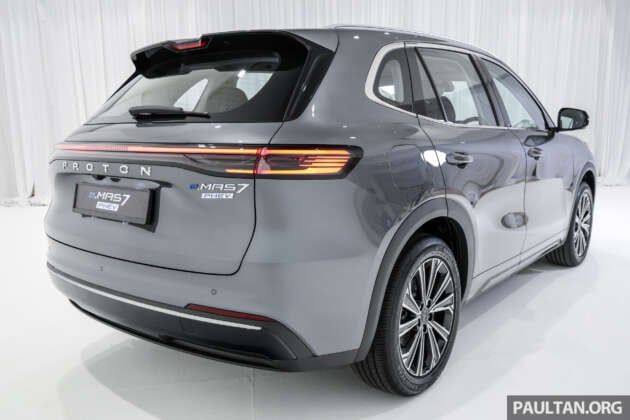
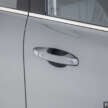
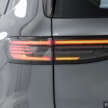
Exterior-wise, the eMas 7 PHEV differs from the EV in its split headlamps (DRLs above, headlamps below), full-width front LED bar (except Prime), a different front bumper and regular door handles (the EV’s ones are hidden/pop-out/flush/recessed/retractable – call ’em whatever you like). The rear number plate’s been moved up from the bumper to the tailgate, allowing a minor rear bumper redesign.
Wondering if those small front intakes can provide enough cooling? Proton says its local R&D team has done 30,000 km of durability testing in various weather conditions, and its international R&D team has done thermal testing in both winter and summer extremes, and discovered no overheating nor other issues.
Same tyre and wheel sizes as the EV (225/55 R18 for the Prime; 235/50 R19 with Goodyear EfficientGrip Performance SUV rubber for the rest), but the PHEV is given a new multi-spoke design. Suspension? Like the EV – MacPhersons up front, multi-links out back. It runs a global set-up; no ‘Proton ride and handling‘. The drag coefficient (Cd) is 0.288, compared to the EV’s 0.275.
Length, width, height and wheelbase are respectively 4,740, 1,940, 1,685 and 2,755 mm, making it 125 mm longer, 39 mm wider and 15 mm taller, and with a 5 mm longer wheelbase, than its EV sister. It’s also slightly larger than both the Chery and Jaecoo.

Interior time. You’ll see that the cabin is pretty much similar to the eMas 7 EV‘s (making CKD easier and cheaper; China’s version has a different cabin) – no matter the variant, you get Flyme OS (with Bahasa Melayu support) powered by a 7nm automotive-grade chip, live charging map integration, a 10.2-inch LCD instrument cluster, a 2.5K 15.4-inch infotainment central touchscreen and leatherette seats.
But unlike the EV, the PHEV gets a tonneau cover (except Prime) and Apple CarPlay/Android Auto from the get-go, plus physical sunroof controls (sunroof only on Premium Plus). To jog your memory, on the EV, you need to go into the screen to operate the sunroof. The button-like front seat backrest inserts have been changed from chrome in the EV to satin silver here to better match the rest of the cabin, but they also lose out on the small Proton logos that the EV has.
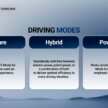
The fuel flap can be unlocked either via the screen or by holding down the left side mirror control button. The drive modes here are Pure (that’s EV-only mode), Hybrid and Power, compared to the EV’s Eco/Comfort/Sport. Pro-Net says interior space is about the same as the EV – there’s 932 mm hip-to-hip between the front and rear seats, 125 mm of rear knee room and 73.5 mm of rear headroom, the last of which the carmaker says is class-leading.


Let’s talk about variants and equipment. Literally the only differences between Premium and Premium Plus are the battery, max DC rate and sunroof.
Both are otherwise equally equipped – powered tailgate, auto-folding side mirrors, auto-dimming frameless rear-view mirror, powered/ventilated front seats, fully-reclinable front passenger seat, rear centre armrest, 256-colour ambient lighting, tonneau cover, 13.8-inch head-up display, wireless charging, 16 Flyme Sound Wanos speakers including in the headrests, auto air-con, seven airbags including a centre airbag (which the Geely Galaxy E5 in China gets and our eMas 7 EV doesn’t), a 360 camera and front parking sensors.
All the stuff mentioned in the preceding paragraph, the Prime doesn’t get, settling instead for six speakers, six airbags and a reverse camera. It also has the smaller of the two wheels offered and no full-width front LED bar (we’ve yet to clap eyes on this base variant, so what it looks like is still a mystery, as is the brand of tyres used – Giti like the eMas 7 Prime EV?).


In terms of active safety, while all variants get AEB, ACC, ICC, lane functions, leading vehicle departure alert and traffic sign recognition, the Prime omits emergency lane keep assist, rear collision warning, rear cross traffic alert and braking, lane change safety warning, blind spot detection, door open warning and occupant detection alert.
Pro-Net has been wildly inconsistent with its base variants – see, the eMas 7 Prime EV has full ADAS while the eMas 5 Prime has no ADAS (although it does have blind spot detection and RCTA). Now, the eMas 7 PHEV Prime has ADAS but no blind spot detection.
The boot can take 528 litres; fold down the back seats for 2,065. This is quite a lot more than the EV’s 461 and 1,877 litres. The PHEV’s 100-litre hidden underfloor storage is also 49 litres up on the EV, although it loses the EV’s under-seat drawer because that space is now taken up by the fuel tank.


You can have your eMas 7 PHEV in Obsidian Black, Lithium White, Mercury Silver, Galena Grey or Aquamarine Blue, while the interior can be had in either Alabaster White or Onyx Black (black is new – the eMas 7 EV’s interior is either Alabaster White or Indigo Blue).
The service interval is 12 months/20,000 km and according to Pro-Net, the car is 41% cheaper over 10 years than a “same-segment ICE SUV” (X70, we guess) at RM29,200 versus RM49,800, including fuel, charging and maintenance. Estimated costs, of course.
By the way, Proton successfully completed its two-day live-streamed stunt – a convoy of eMas 7 PHEVs (full tank, full battery) drove from Penang to Johor Bahru and then to Shah Alam before finishing at the Proton COE, covering 1,104.5 km with 189 km range remaining and averaging 4.0 litres per 100 km. It has to be noted that this was achieved with mostly highway driving and may not easily reflect real-world conditions.

Proton eMas 7 PHEV – Aquamarine Blue exterior, Alabaster White interior




Proton eMas 7 PHEV Premium















































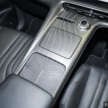












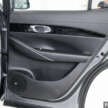




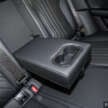


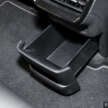


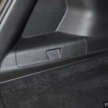


Proton eMas 7 PHEV Premium Plus interior
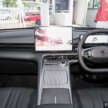
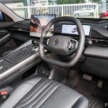

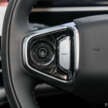
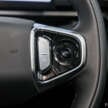




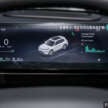











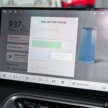







































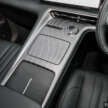

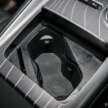






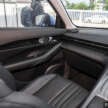
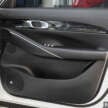


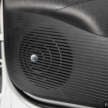
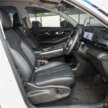



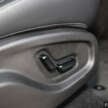
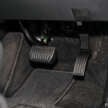
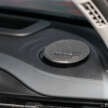




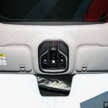
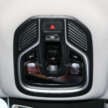
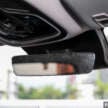
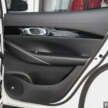
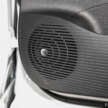



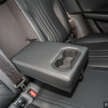


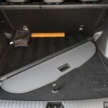




Proton eMas 7 PHEV official photos














Proton eMas 7 PHEV presentation slides









AD: Drive the Proton model of your dreams. Submit your details and Proton PJ will get in touch with you.
Looking to sell your car? Sell it with Carro.













Pure EV range is around 150km..mated with a 1.5 liter engine which usually give us about 4-500 km range. Then when combine this together it can give more than 1000km…we know energy cannot be created but only transform from one to the other, so how is this happening?
With depleted battery, it’s 1.5H-EV performing efficiently, so it’s not less than 500km.
estimated 18km per liter of fuel usage, multiply by a full tank of e.g. 40 liters? its simple math
Your understanding is EV battery (150km) habis, then go to engine (500km), so A+B = 650km. That is incorrect
The 1.5L engine acts primarily as a high-efficiency generator. It runs at its most optimal, constant RPM (its “sweet spot”) to generate electricity.
Real world tests in China by reviewers have shown that 1,000km+ is easily achievable
This generated electricity either:
-Powers the electric motor directly, or
-Charges the battery while driving, or
-Does both
The engine also directly drives the wheels at highway speeds, where it can be more efficient than converting energy twice (mechanical -> electrical -> mechanical)
The range is a result of running the drive by electric motor and at the same time the ICE running parallel to charge up the battery until 85%. the ICE will run under more efficient atkinson cycle. ICE based car suffer from having to run the engine while idle in traffic light to power auxilliary device especially air-con. but in this case, the air con is powered by the battery. as such less loss from ICE when idle. it is more efficient than the ‘start-stop’ method which european promote earlier on. we know it is not the efficient and the numbers are over stated. in fact a lot of myvi user turn it off.
this phev makes good proposal. sounds like it will sell well.
btw, proton, take note if possible change the fueling position from passenger side to driver side. ever notice lately in petrol station the queue for passenger side refueling is longer. since x50, x70 , x90 or geely sourced vehicle have transition to passenger side same as perodua and toyota’s, there have been too many on left side. consider this.. my saga always happily goes to the station with almost no queue nowadays
It’s not just A + B = total range. It’s smart energy orchestration.
Aren’t you familiar with the hybrid theory?
Electric motor for low speed and city use. Petrol engine for charging battery and helps at higher speeds. If your daily commute is less than the EV range, you can use it as pure EV.
1,940mm wide, i like it’s dimension.
rear still bouncing like eMas7 EV?? almost vomit
Haiya, floaty and bouncy is not the same. Bouncy ride is like sitting in pickup truck with leaf springs, which definitely doesn’t apply to the emas7.
seems like they are undecided if they should proceed with 130k price with the rm 99 booking fees to test the market, while chery tiggo 7 phev is cheaper, better engin noise insulation, double laminated windows for wind noise rejection, turbo engine for low battery cases would not cause sluggish driving experience and with stiffer suspension.
turbo engine is the deciding factor here . 150bhp vs 100hp for the proton means charging speeds much faster.
mate no one has tested the Emas PHEV, how did you know that engine noise insulation is better?
youtube, it’s not a new car to begin with, proton is too slow and we’re getting old stuffs except for the larger battery, china has release new version with better quieter engine that rev less, double laminated glass and better noise insulation.
In the last paragraph, you said that mostly the test drive was done mostly on highway.
Meaning that, range is better on the highway compared to the city driving as opposed to an EV car; where the city driving has better range.
Not necessarily, as it depends on the speed the car was driven on the highway. At moderate cruising speeds of below 100 km/h, EVs would easily match or even exceed its WLTP rating.
But there’s no denying a modern PHEV is more convenient and flexible for long drives.
The 1.5L engine acts primarily as a high-efficiency generator. It runs at its most optimal, constant RPM (its “sweet spot”) to generate electricity.
The engine also directly drives the wheels at highway speeds, where it can be more efficient than converting energy twice (mechanical -> electrical -> mechanical)
If Driven 2014 compared petrol vs hybrid vs downsized turbo, might be time to compare different manufactures approach to hybrid
the middle variant hits the sweet spot. why bother with a bigger battery when most owners wont bother to charge it .
if you put it in hybrid or auto mode its self charging
yes captain , thats my point. it will rely on selfcharge all the time because most owners will never plug it in to charger. so it defeats the purpose of having big battery
I think that’ll depend on the pricing. If the middle spec is just 5 to 6k cheaper, most will just opt for the top spec. After all, a lot of people are willing to spend more than 6k every year to get the latest iphone.
Because it offers more than double the pure EV range. So if 90% of your usage is commuting and urban driving and less than 120km per day and you have a plug-in charger at home, that full tank of fuel can last indefinitely as the engine only turns on to recharge the battery with 20% or less of charge left in the battery.
to counter battery degradation in the long run?
short term, 20% is always locked in and unusable, so the battery range already need to minus that.
I stay at landed so charging it at home with a bit more range to spare at EV mode is not a bad thing
im wondering if e.mas cars service at normal p1 service ctr or there r dedicated ProNet service center? if service at normal ctr, with the new saga and emas5 so well sold, is the service center able to cope with the high load? btw, emas7 is abit big for me, prefer emas5 as a daily car, hope P1 will launch a emas5 Phev and sell around 70k.
from what i heard, all Emas have to service with ProNet. could be wrong i haven’t owned one yet.