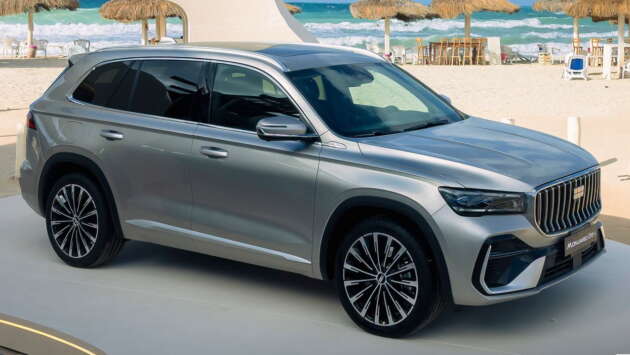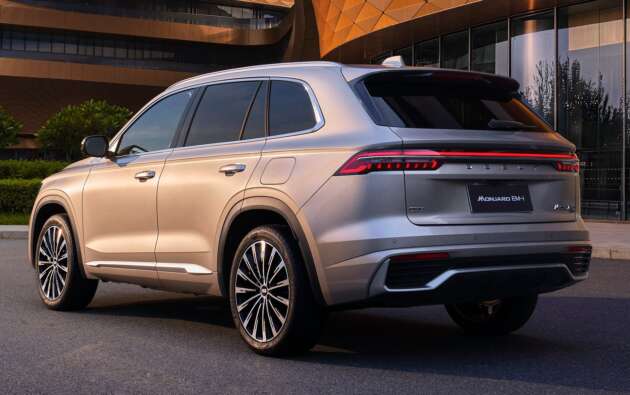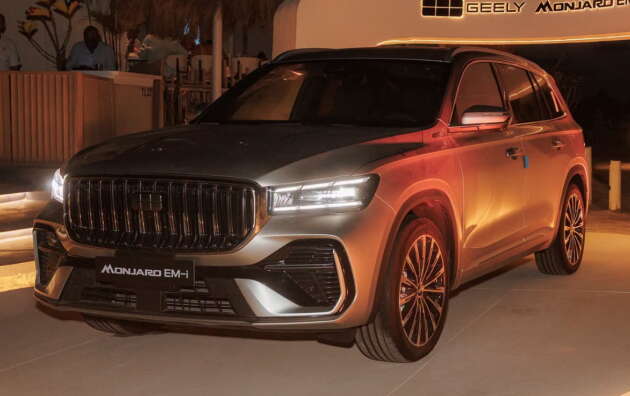

























Just over five months after its global reveal, the Ferrari Amalfi Spider has made its way to Malaysia, with the premiere in Kuala Lumpur held by Ital Auto also marking the regional introduction of the convertible version of the Amalfi, which made its ASEAN debut here back in March.
Measuring in at 4,660 mm long, 1,974 mm wide and 1,305 mm tall, with a 2,670 mm-long wheelbase, the soft-top V8 2+2 – which is essentially a refreshed Roma in its Spider form – mirrors the coupe in terms of dimensions, being a whisker longer and taller, in both areas by four mm.
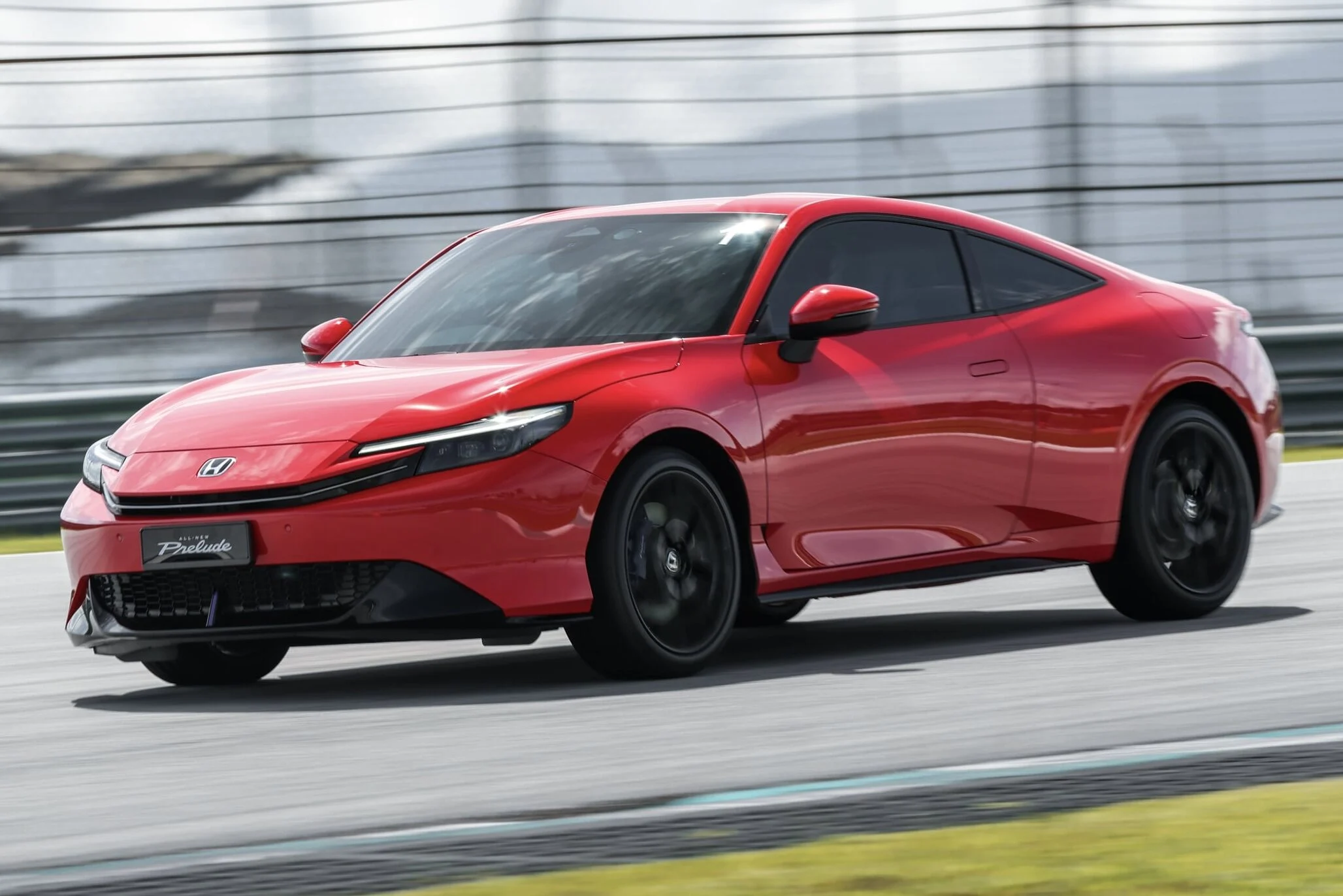
The design flow and proportions also follow the design path taken by the coupe, with the same front minimalist front-end, which has a floating body-coloured wing above a dark slim band integrating sensors and narrow headlights in it. Of course, the removal of the roof means that some design elements have been reworked, notably in the flow-through section of the rear part of the cab.

The soft top on this one offers the same performance parameters as the one on the Roma Spider, opening in 13.5 seconds and able to be operated on the move at speeds of up to 60 km/h. The top of the Z-fold kinematic system roof is constructed with a five-layer fabric that the automaker says delivers a level of soundproofing and heat insulation comparable to that of a retractable hard top.
As for the fabric itself, there are plenty of personalisation options, with a choice of four tailor-made fabric colours and two technical fabric options, including a new option called Tecnico Ottanio, which has a distinctive weave to create a three-dimensional, shimmering effect across all lighting conditions.
Stowed, the unit measures in at 220 mm thick, ensuring that adequate luggage space is preserved – with the top up, boot volume is 255 litres, while 172 litres is available for cargo with the top down. To aid occupant comfort in this configuration, the Spider has a wind deflector integrated into the backs of the rear seats, which can be activated by the driver at the touch of a button without needing to stop.


With it engaged, the airflow that enters the cockpit of the car from the rear is deflected, creating a more stable bubble of comfort around the passengers by reducing turbulence and noise, particularly in the head area. The system has been calibrated with an opening angle of 101°, and can be opened at speeds of up to 170 km/h, above which it is electronically limited. When the device is already open, it can be used right up to the car’s maximum speed.
As you’d expect, the soft-top mechanism and corresponding structural reinforcement to retain rigidity does make it heavier, the Spider tipping the scales at 1,556 kg (dry) to the coupe’s 1,470 kg, and it also alters its weight distribution to 48% front/52% rear compared to the 50/50% of the coupe. There’s no sacrifice in performance, though.
Like the Amalfi, the Spider is equipped with a F154 BH 3.9 litre twin-turbocharged V8, which provides 640 PS at 7,500 rpm and 760 Nm from 3,000 to 5,750 rpm, the output being 20 PS higher than on the Roma Spider.


Power is sent to the rear wheels via a revised eight-speed Magna wet dual-clutch transmission, first seen on the SF90 Stradale, with the unit on the new car featuring a more powerful TCU and deeper integration with the engine software for improved shift smoothness and speed.
It takes 3.3 seconds for the Spider to do the 0-100 km/h sprint, identical to the coupe despite the weight penalty, and it also hits a 320 km/h top speed like the Amalfi. It’s only in the standstill to 200 km/h mark that the Spider is a fraction slower, getting to the mark in 9.4 seconds, four-tenths of a second more than the coupe’s 9.0 seconds, which will be imperceptible in use.
Other than that, the rest of the mechanicals are identical to the hard top Amalfi, including all the technical revisions that were carried out for the latter, from the inclusion of the ABS Evo from the 296 GTB to the reworked electric power steering as well as a new brake-by-wire system, which improves braking efficiency, reduces pedal travel and enhances modulation.


The active rear aero from the coupe is also to be found here, with the same three configurations – Low Drag, Medium Downforce, and High Downforce (HD), as are the same 20-inch wheels, wrapped in 245/35 R20 front and 285/35 R20 rear tyres.
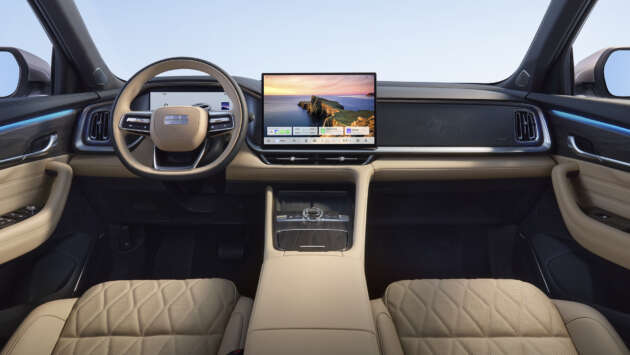
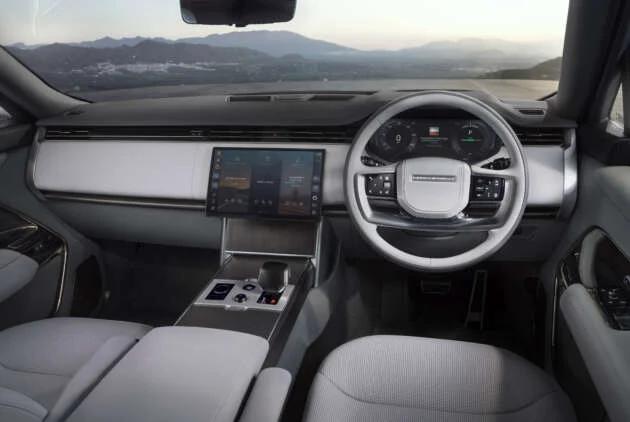
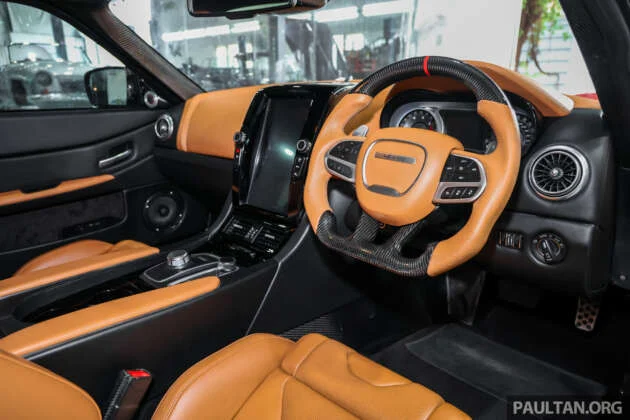
The similarities extend to the interior, with a new twin-cowl presentation taking over from the Roma Spider’s dual-cockpit design, with the portrait touchscreen and flying console from the old car being replaced by a 10.25-inch landscape-oriented infotainment screen and a more traditionally-styled centre console. Machined from a single block of aluminium, this houses the “gated” gear selector and a Qi wireless charger.
Similar to the coupe, there’s a multi-function steering wheel that sees a return to physical buttons instead of haptic controls, complete with the inclusion of a start button. Also on is a new HMI, a 15.6-inch digital instrument display and an optional 8.8-inch slim passenger screen, along with Apple CarPlay and Android Auto connectivity.


The Amalfi Spider also debuts a new exterior colour called Rosso Tramonto, which is distinguished by subtle orange undertones that the automaker says are inspired by the hues of the Amalfi coast bathed in the warm light of the setting sun.
Unlike the 849 Testarossa that was launched here in June, which listed pricing for both the coupe and spider variants, no official Malaysian price was stated for the Spider (as was the case with the Amalfi), with only an indication that it would be somewhere in the RM3 million plus region with import duties and taxes applied, but excluding customisation options, registration and insurance.
Given the Roma vs Amalfi comparative pricing pre-duties/taxes, this should be higher than that announced for the Roma Spider, which was RM3.2 million with duties and taxes when it went on sale here back in 2023.
GALLERY: Ferrari Amalfi Spider